“Winning with AI” is a standout corporate strategy book
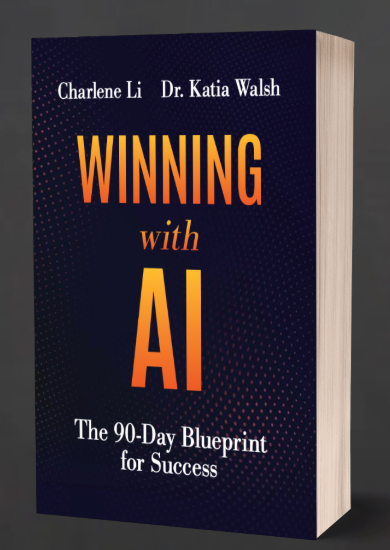
Today is the publication date for Charlene Li and Katia Walsh’s Winning with AI: The 90-Day Blueprint for Success. These authors, both old friends of mine, have solved the unsolvable problem: how can you write a book on corporate strategy for AI, a transformational technology, when it’s changing so fast?
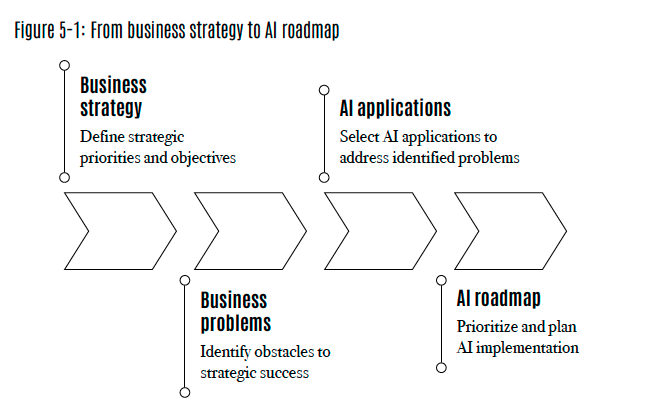
This is not an AI strategy book, because, as Charlene and Katia vividly point out, companies should not really have an “AI strategy.” What they should do is identify their existing strategic priorities and then create a roadmap for how AI can enable them to reach those existing goals. That’s both smart and, more importantly, achievable, because it doesn’t require reorienting the whole company. The goals remain the same. It’s the means to achieve those goals that AI improves.
A fast, enlightened approach
Winning with AI is built in a unique way. It’s structured into 12 chapters, each intended to be accomplished in one week. These are meaty chapters, too — what Charlene and Katia expect you to accomplish in any given week is a tall order. But this structure helps emphasize that the embrace and exploitation of AI for corporate goals has to happen extremely quickly. Waiting is falling behind, and falling behind is deadly.
Several points that they made stood out to me:
- Pilots are counterproductive. As the authors write, “Pilot purgatory kills momentum. Build for scale or don’t build at all.” The challenge lots of companies have is the embrace of pilots intended to accomplish what’s easiest rather than what’s important. Twenty or so pilots later, all those prototypes add up to nothing. Focus on creating an impact on corporate priorities, not on what’s easiest, and you’ll actually get somewhere.
- Ethics must be built in from the start. Chapter 2 (week 2) focuses on “The Responsible AI advantage.” You can’t build AI applications now and make them ethical later; you need AI ethics policies and an AI ethics office before you even get started.
- You don’t need clean data. Clean data never arrives. Deal with the flawed data you have — and use AI to interpolate what’s missing.
- Master the six-quarter walk. The authors assert that AI moves too fast for traditional strategic planning. Instead, build a rolling 18-month roadmap for what you’re doing and where you’re doing. Eighteen months out gives you something powerful to aim at. Sure, you’ll be revising that based on improvements in AI tools and changes in facts on the ground. But revising a plan is a lot easier than operating without one. As this book points out, only 22% of organizations have a visible, defined AI roadmap, but those that do are twice as likely to see AI-driven revenue growth.
- Avoid the “efficiency trap.” “Competitive advantage typically comes from engagement and reinvention,” the authors write, rather than the obvious benefits of cost-cutting and efficiency.
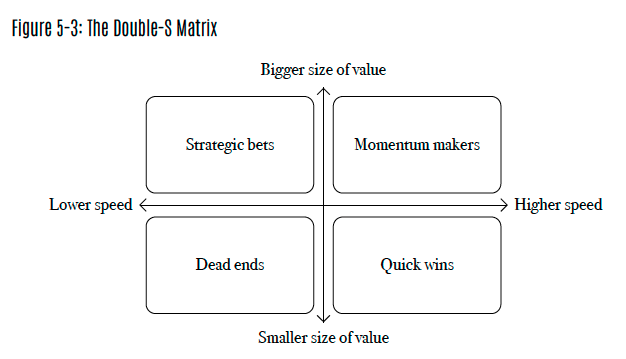
- Prioritize projects based on size and speed. Use the the “Double S” Matrix method.
- Cultivate the AI mindset across the organization. The mindset includes a commitment to speed, focus, continuous reinvention, lifelong learning, and customer-centricity. According to Winning with AI, “A study from MIT found that 95 percent of AI initiatives fail. Legacy processes, internal politics, and confusion about priorities block progress. It wasn’t the tech that failed. Or the people. It was the mindset.
- Recognize that AI makes humans’ work harder, but it’s worth it. Even as AI automates rote tasks, it demands that people worker harder to understand it, shape its tasks, and work alongside it. Training employees to do that — not the busy-work that is easily automated — makes the difference in how AI contributes to corporate goals. According to As Sami Hassanyeh, chief transformation officer at AARP, told them, “The transition to leveraging these AI tools is a people problem. Either you can get rid of your people, or you can bring your people along and really turbocharge your business. I prefer the latter.” Similarly, at Ikea, rather than reduce the call center workforce, the company trained those workers to be interior design advisors, contributing to a $1.4 billion increase in revenue through consultation services.
A unique approach to advice for the rapid pace of AI change
There are not a lot of prompts in this book, nor advice on which large language model to use. It’s pitched at a much higher strategic level than that. It’s about how to organize and motivate your workforce to leverage these tools for business advantage.
But there are specifics. The specifics are in the case studies, which show how companies like PwC, Securian Financial, Ally Bank, Ikea, AARP, and Levi Strauss are accomplishing actual business goals. Charlene and Katia interviewed more than 50 executives, and Katia herself has implemented AI and digital transformation in organizations like Levi’s and the Harvard Business School. These case studies, along with the comprehensive strategic advice here, deliver a combination of practical and strategic insights that won’t become obsolete six months from now.
Here’s the final takeaway from this book:
The organizations that win won’t be those that executed the most pilots or achieved the best ROI on automation. They’ll be the ones that dared to ask bigger questions: What is possible now? What customer problems can we solve that we couldn’t before? What can we create that our industry said was impossible?
AI is going to create winners and losers in every industry. This book might be just what you need to make sure you’re one of the winners.