Epstein’s appeal; weasel words revealed; publishers embrace AI: Newsletter 25 February 2026
Newsletter 140. How a pervert assembled the world’s most consequential network of influence. Plus, legal rules for authors using AI, bestselling book covers, three people to follow, three books to read, and the world’s most versatile (and cost effective) book coach.
What attracted all those prominent people to Jeffrey Epstein?
Let me get this out of the way first. I have no sympathy for pedophiles. People who take sexual advantage of children under the age of consent are evil and should be shunned and prosecuted.
If you cannot stomach even discussing this topic, please don’t read this essay.
But the whole set of events has made me wonder what could be so powerful to attract so many people to an environment where sex crimes were being committed? And how could we prevent it from ever happening again?
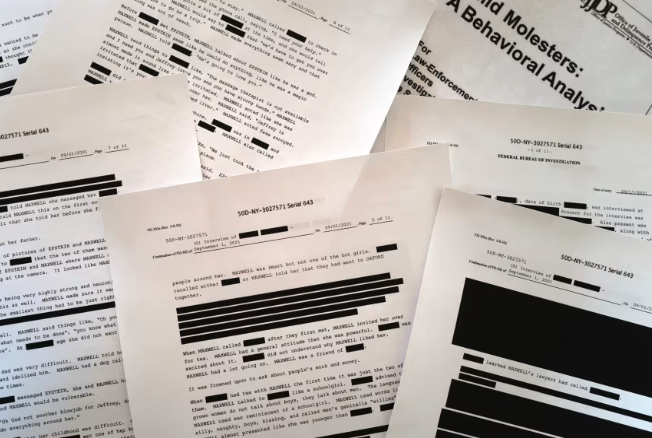
If there were a just a few prominent people in the Epstein files, it would be easy to dismiss them as unusually evil and horrible people. But the Epstein files are crammed full of hundreds of successful business leaders, prominent academics, politicians, and media figures.
One possible explanation, of course, is that all these prominent people, mostly men, don’t mind child rape. Maybe you are that cynical, but I don’t have such a jaded view of men, prominent or not. So why were all these people involved with Jeffrey Epstein, a man who pled guilty to sex crimes involving underage girls in 2008?
We need to remember that some of the people listed in the files were mentioned by others and never had anything to do with Jeffrey Epstein. Others ceased to have anything to do with him after his conviction and were unaware of his sex trafficking before that. Others may have continued to connect with him on matters that had nothing to with his sexual activities and were unaware of his conviction. Some probably saw surprisingly young girls around him couldn’t conceive of what was going on. Some likely rationalized that it was perfectly fine for girls who wanted to be there to do as they apparently pleased, even though it wasn’t. And of course, some, horribly, thought sex with children was acceptable.
I make excuses for none of this. Anyone who got a whiff of what was going on should have not just refused to be around Epstein, but should have reported him to the authorities. And once he entered into the plea agreement, no respectable person should have had anything to do with him. But for decades, that hardly ever happened.
What was the powerful attraction that brought so many powerful (mostly) men into Epstein’s orbit and caused them to turn a blind eye towards what was going on?
Influence.
Epstein was at the center of a remarkable and perhaps unprecedented network of powerful, rich, smart, and intellectually advanced collection of individuals. Many of the activities he participated in were intellectual in nature, involving bringing together thinkers of all types to discuss ideas and ways to improve the lot of humankind.
The academics and thinkers among this group sought to gain influence for their ideas and to benefit from colloquy with other thinkers — and potentially to obtain funding from rich patrons.
The tech industry multibillionaires obviously weren’t there to get richer. They were there to reinforce that they belonged in this special club, and to search for ideas that they could use to change to world. Leaders are curious and on the prowl for the next big thing. A group like this is where they could find that.
The political figures sought the influence of belonging and potentially easing the path for big business ideas. And of course, to get friends who could contribute money for their campaigns.
All of them imagined that this was a group that could conceive huge changes in the world and actually make them happen. Those among my readers who style themselves as thought leaders know this yearning. The idea that you could be among the thinkers and leaders who could create change like that is irresistible. The idea that such an opportunity existed and you were not included is intolerable. This is the same reason why it’s a such a big deal to go to Davos or Sun Valley. But in this case, it was one man who determined who was included: Jeffrey Epstein. So all of these potential seekers of influence felt a powerful need to be close to Epstein.
With a force this powerful, it was probably easy for these folks to rationalize why they should pay no attention to Epstein’s activities with young girls. Some might have not realized what was happening, or assumed that after Epstein pled guilty, that he’d become reformed. There was a powerful incentive to look the other way, because of the potent networking and intellectual advantages of the relationship.
If, in this environment, you felt compelled to report Epstein to the authorities, you were voluntarily making yourself a pariah among your intellectual and business peers. Epstein would undoubtedly tell them that you were imagining things and had a vendetta. You’d be ostracized from a prestigious group of your former peers. You’d become entangled in law enforcement action.
Given that choice, people who thrive on power and influence would have a powerful incentive to turn a blind eye to anything they saw and to rationalize it in their minds. The moral choice could save your conscience at the cost of your career and influence. Being that close to people who could actually change the world, and voluntarily choosing to leave, is very difficult.
This can never happen again. Perhaps we need to provide more wholesome places for intellectuals and powerful people to network. Perhaps we need more moral education for the next generation of leaders while they are still in school. We need more trials of sex offenders to reveal publicly the damage that they have caused. We need more prosecutions of those in the Epstein files who raped and trafficked young girls.
As I’ve described, the dynamics of power may inevitably protect people like Jeffrey Epstein. But in the end, Epstein was prosecuted. Perhaps there is hope that, as as society, we can do better at protecting the vulnerable.
If you seek influence, there is a lesson here for you, as well. This is not just a theoretical set of events that happened to other people. When people offer you a chance to connect with powerful people, it’s your responsibility to vet them and to understand their reputation. The opportunity to gain influence is often real. But the damage to your reputation, and to the lives of others, of associating with evil people is a real risk. You could end up regretting your choices for a very long time.
News for writers and others who think
The Authors Alliance published a statement about the legal situation for AI-generated text.
According to Forbes, publishers are adopting AI. Not to write or edit, of course. But to “streamline operations” and help identify promising manuscripts.
Designboom examined 700 bestselling book covers to find trends in what attracts readers. My own opinion: originality and striking design is more valuable than copying any trend.
In The Register, Claudio Nastruzzi describes why so much AI text is boring: “semantic ablation.” Translation: it drives writing to the middle of the bell curve where everything sounds the same.
Where can you find the statistical truth about what’s happening in America? Not in the State of the Union (regardless of who’s making the speech). USAfacts assembled a balanced perspective on actual government data and published it before last night’s speech.
According to Vervanté, Amazon has clamped down on new print-on-demand books that don’t come from vetted distributors or Kindle Direct Publishing. This makes it harder for self-published authors to get on the platform, but it was necessary to stem the tide of crappy summaries and AI-generated slop.
What do weasel words like “somewhat likely” actually mean? As reported in the The Times of London, Adam Kucharski actually asked readers how they interpreted them. The results were all over the map, which is a good reason why you should avoid weasel words.
Three people to follow
Joni Renick , Gartner’s team manager for marketing and communications
Alex Sambvani , whose restaurant AI tool Slang AI turns calls into revenue
Sarah Suzuki Harvard , copywriter and standup comic tracking AI buzzwords
Three books to read
Revealing: The Underrated Power of Oversharing by Leslie John (Riverhead, 2026). The book that finally vindicates my overwhelming urge to tell way too much.
The Art of Non-Conformity: Set Your Own Rules, Live the Life You Want, and Change the World (TarcherPerigee, 2010) by Chris Guillebeau. Your journey is unique. Stop following paths created by people who don’t care about you.
Corporating: 3 Ways to Win at Work (2026) by Mandy Mooney. A 100-page “cheat sheet” for navigating corporate life with confidence.
Authors, start your journey here
How can I position my book? How can I make time to write it? How can I make it successful? The virtual book coach answers all these questions — and it’s only two bucks to start.