Be yourself; AI books at B&N; fake research reports: Newsletter 27 May 2026
Newsletter 153. What you do changes, but who you are shouldn’t. Plus, Hollywood fails to react to technology yet again, corporate AI-washing, three people to follow, and three books to read.
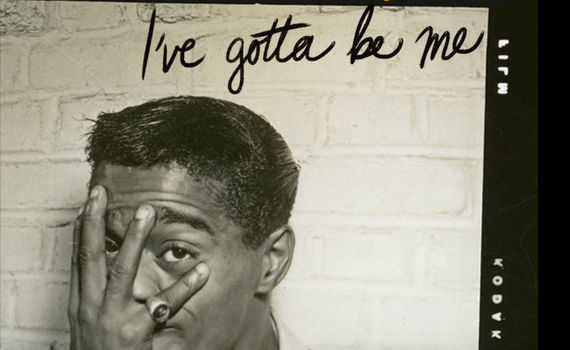
I’ve gotta be me.
I’ve had a lot of jobs. Math instructor, technical writer, startup contributor, publishing executive, analyst, author, editor. Anyone who’s in the working world for a while makes job changes like this (if not, aren’t you bored?).
If you define yourself by your job, this could result in a lot of doubts about your true identity. So don’t define yourself that way.
Define yourself by who you are.
With the benefit of hindsight, this is who I am:
- Analytical. I was trained as a mathematician, focused on logic and math. Even when I was no longer a mathematician, I was able to indulge that part of my personality as the codesigner of a mathematical software product. When Forrester Research hired me as an analyst, I could get paid to be analytical, which went a long way towards developing that side of my identity.
- Curious. It’s not enough for me to know things. I have to know why they are the way they are. Exploring new ideas stimulates me, especially when it means discovering truths that no one else yet knows. My curiosity never rests.
- Principled. I’ve given up jobs and significant paydays because they would have required me to support false or evil ways of thinking. At Forrester, telling the truth with courage despite pressure from whole industries was a core value. I won’t compromise integrity in the things I care about.
- Determined. I hate leaving things unfinished. I like planning and executing long projects. That attitude served me when working on startups, and it’s why I love working on books.
- Eloquent. I love words. I’ve always been attracted to writing-based projects. I wanted to be an author since I was a child. It’s a comfortable persona for me.
- Promotional. I am not shy. I think I’m hot stuff and I’m going to show that off. It’s not enough to figure things out. I need to find ways for people to notice what I did. Blogging suits me.
- Impish. I am never completely serious. I would rather poke holes in the ponderous than be part of a rigid, humorless exercise of power. Humor keeps me happy, although the urge to make a joke at any random time has probably limited my ability to be successful.
As essential as these qualities are to who I am, they don’t reflect what things I don’t do. I’m not focused on making the most money. I tend to be a bit too tough on people around me. I don’t properly take care of my own well-being. And I’m prone to an unwise degree of smartassiness.
These qualities are why I was a satisfied and entertaining math instructor, a weirdly creative technical writer, a determined and inventive startup contributor, a precedent-busting publishing executive, a provocative and highly visible technology analyst, and a dedicated author and editor. They were all just versions of the same guy. I’m a little greyer now, but I don’t feel much different.
The people who connect with me these days tend to know my reputation — or come recommended by somebody who does. They know what they’re likely to be getting. It saves time and eases relationships to work with people who know what to expect.
It’s too late for me to change. But it was probably already too late to change a lot of these qualities when I was fresh out of college. Knowing and being comfortable with who you are allows you to spend your time applying those qualities, rather than doubting yourself.
Who are you? Do people know what to expect from you? Are you still changing?
News for writers and others who think
Barnes & Noble CEO James Daunt said he was open to the chain carrying AI-generated books if they were appropriately labelled. You might think this is a bad idea because AI rips off authors’ content. I think it’s a bad idea because such books suck.
In the Financial Times, a report about how EY Canada yanked a cybersecurity report after it was revealed to be stuffed with fake references and made-up statistics. Writing reports like this is time-consuming and expensive. Fabricating them with AI to look just like the real thing is cheap. This is going to become an increasing problem, both for think tanks like EY and within corporations.
The Guardian describes how companies are increasingly bragging about wrapping themselves in AI to look shinier and more valuable. But remember that the peak in the hype cycle is pretty sharp. Within just a few months, the reverse will happen: firms are going to brag about how they are successful without AI.
Robert Tercek writes incisively about how AI is going to catch Hollywood flatfooted yet again. Two decades ago, I wrote about how media goes through the Kübler-Ross stages of grief as it grapples with technology change. The fact that Rob is using the same metaphor as AI washes over the industry is another sign of how Hollywood always remains rooted in traditional thinking until it’s way too late.
Three people to follow
Chris Weller , big idea ghostwriter
Lucinda Halpern , agent and expert on book proposals
Alyssa Kruse , really smart nonfiction book editor
Three books to read
Young King: The Making of Martin Luther King Jr. by Lerone Martin (HarperCollins, 2026). How did Martin Luther King’s adolescence create the man he became?
The Madness of Believing: A Memoir from Inside Alex Jones’s Conspiracy Machine by Josh Owens (Grand Central, 2026). Four years insight Alex Jones’s pernicious disinformation factory.
Reading Pictures: A History of Illustration by D. B. Dowd (Princeton University Press, 2026). A richly annotated history of hundreds of years of book illustrations.