21st Century author; LLMs and truth; virtual reporters
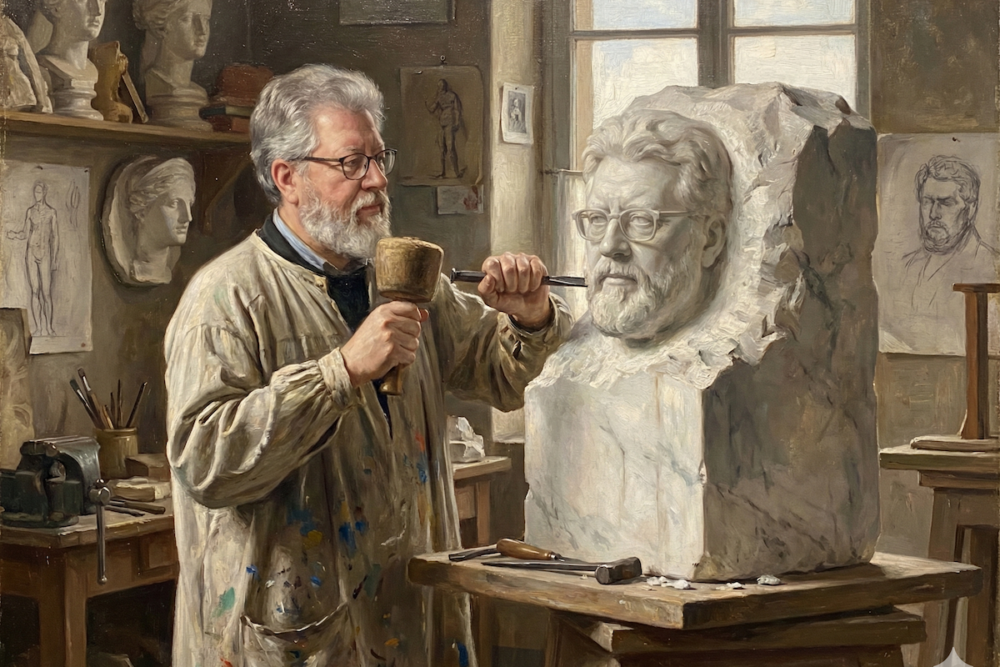
Newsletter 139. What does it mean to be an author in the age of AI and instant publishing? Plus, the Cleveland Plain Dealer uses AI to write articles, AI detectors are a joke, three people to follow, three books to read, and one bot with infinite answers.
What is an author?
I wanted to be an author as soon as I learned to write. I learned to read early (thanks, Mom and Dad), started devouring books, and was immediately in awe of the authors’ ability to create something powerful, something full of ideas, something diverting that I could hold in my hand and be whisked away to a different world.
So I entered my working career hoping that I’d be able to write a book someday. Working at Forrester, entering my forties, I started to plan to write a book, because in my mind, if I didn’t publish a book by the time I was 50, who was I kidding? With the help of fellow analyst Charlene Li and Forrester’s CEO George Colony, I got the chance to write that book and joined the fellowship of authors.
A lot of people have that same ambition that I had. But it is now easier to write and self-publish a book than it has ever been. Give a few prompts to an AI, upload the result to Amazon, and voila, you’re an author.
But are you really?
When I think about why I wanted to write a book, it wasn’t about a bound set of pages with words I’d typed on them. It was about mind-to-mind communication. Looking more carefully at what I really wanted, it was to change people. Before reading my book, they would be one way; after reading, they’d be different, because of what they read and what it caused to happen in their minds. That’s the real reason.
So in this world where “writing” and “publishing” a “book” has been watered down to the ultimate degree, we need a new definition of author.
An author is a human being who has collected ideas into a unique, text-centric, deliberately structured package that changes the way people think.
I’ll take that apart, because the pieces here will tell you what you need to do to achieve your own ambition of being an author.
- An author is a human being . . . This is about people’s ideas influencing other people. If the creator is not a human, they can’t be an author. No AI entities are eligible.
- . . . who has collected ideas . . . Ideas are central. If you have no ideas, you are not an author. The quality of those ideas determines the power of your book. If you aspire to be an author, then spend your time researching, developing, road-testing, and improving your ideas.
- . . . into a unique . . . An author’s work must be differentiated. If you write the same thing somebody else wrote — even if you don’t copy their words — you are a plagiarist, not an author. Differentiation is an essential part of the work.
- . . . text-centric . . . Yes, I know there are picture books. But in my view, authors create stories and illuminate ideas primarily with words. Authors write. It’s a fundamental part of who they are.
- . . . deliberately structured . . . A book requires structure. It has a beginning, in which the ideas are introduced; a middle, in which they are further defined; and an end, in which we observe and can act on the consequences of those ideas. Authors worry about structure, because it is what draws the reader forward.
- . . . package . . . An awkward word choice, perhaps. But the point is, a book is discrete. It has boundaries. It’s not a blog or an endless series of social media posts.
- . . . that changes the way people think . . . This is essential. If your book causes no change in the reader, are you really an author? To a great extent, the success of an author is directly proportional to the number and influence of the people that the book has changed. This is why true authors don’t just focus on the book, but lean heavily into the job of promoting that book so people will know about it.
I want to point out what isn’t in this definition. An author who hires a ghostwriter to refine the ideas and type the words is still an author, because their book is an expression of their ideas. An author who uses AI to help research a book and provide feedback is still an author. An author who self-publishes or uses a hybrid publisher is just as much an author as one who is traditionally published, so long as people read that book and are changed by it. The author of an audiobook or ebook is no less an author as the writer of a print book. What matters is whether the ideas in the book have changed people.
Conversely, a writer who produces a 500-page tome that nobody can get through isn’t really an author. They’ve produced no ripples in the world. They may as well not exist. If producing that tome is your ambition, you’re objective is simply to be published. That doesn’t make you an author.
If you want to be an author, think about this. Don’t think about pages and publishers. Think about ideas. Think about differentiation. Think about structure and words and compelling stories. And think about influence. These are your objectives.
No matter where a successful author starts, this is where they end up. It’s why authors are different. And why wanting to be one is a goal worth pursuing.
News for writers and others who think
The Cleveland Plain Dealer revealed that its entry-level reporters now focus on collecting facts, after which an AI creates a first draft of the article. Some commentators including Will James found this outrageous; others like Jeff Jarvis think the outrage is misplaced. If an editor is turning this text into something interesting, I’m not so worried about it; do we really need a writer spending their time on that article about the three things that came up at the school board meeting? But without this entry-level job, where will the next generation of journalists learn to write?
At HBS: the Ladder of Inference is a useful way to think about making decisions.
What was it like to turn myself into a chatbot? Read my reflections on Jane Friedman‘s blog.
Steven Rosenbaum had a discussion with ChatGPT about truth. It’s very clear from that dialogue that what matters to AI is capability; truth is what’s left for the pesky humans to disentangle, if they dare. Arguing with unprincipled fools tends to be fruitless, regardless of whether they are human or not.
Christopher Penn says AI detectors are a joke: you can no more detect AI writing than detect whether the author of a piece of text is male. He asks: How many students are you willing to kick out of school for cheating who didn’t actually cheat? Good question.
Three people to follow
Fei-Fei Li , ex-Stanford AI ethicist
Dorie Clark , insightful author and expert on positioning thinkers
Nathan Baschez , redefining how people write with AI
Three books to read
The Last Kings of Hollywood: Coppola, Lucas, Spielberg—and the Battle for the Soul of American Cinema by Paul Fischer (Celadon, 2026). Movies changed in the 80s. This is how and why.
Black AF History: The Un-Whitewashed Story of America by Michael Harriot (Dey Street, 2023). Retelling history from a Black perspective.
AI for Good: How Real People Are Using Artificial Intelligence to Fix Things That Matter by Josh Tyrangiel (Simon & Schuster, 2026). A cheerful look at stuff AI does well.
Two bucks. Infinite answers.
My chatbot answers all your questions about books. Open 24 hours a day. $1.99 to get started. Really — if you think you want to be an author, this is the easiest way to get started.
Talk about differentiation! You’ve nailed it!