What’s your worldview?
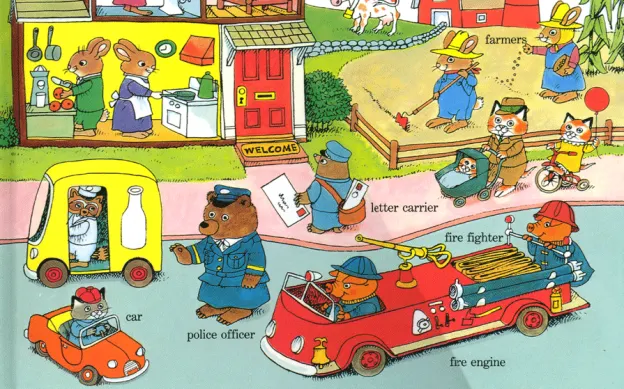
Who you are determines how you explain the world. I know I’m generalizing, but typically, when faced with a challenge . . .
Engineers see problems and processes.
Architects see spaces.
Teachers see opportunities for learning.
Doctors see conditions and ways to treat them.
Software developers see algorithms.
Soldiers see enemies and allies and weapons.
Personal trainers see strengths and weaknesses.
Managers see ways to match people with objectives.
Writers see stories.
So . . .
These differences aren’t problematic. They’re opportunities.
If you’re facing a challenge, acknowledge your biases. You see the problem in the ways your experience has led you to see it. If you can’t find an answer, your worldview may be limiting your vision.
Find somebody who sees the world differently. They may not have the answer, either. But they’ll see the problem with a different perspective, and that is likely to help you out.
This one hits home. Great thought piece, Josh. Especially poignant as I’m just finishing extensive travel in Vietnam and Japan where cultural and political differences have me reconsidering the pros and cons of some entrenched western worldviews. Religion (Shintoism, Buddhism v. Christianity). Politics (democracy v. Communism). Conflict (the war in Vietnam where they claim to have been fighting defensively for their own reunification against the influence of outside powers waging a proxy war on their land killing their people, and of course the atomic bombing of civilians in Japan during WW2). The focus on the benefit of collective society in Japan v. individualism in the U.S. All this to say that exposure to different cultures challenges and sparks healthy reconsideration of long-held beliefs.