Weak promotion dooms good books
I’ve been intimately involved with five books by other authors in the last several years. I ghostwrote four and extensively edited and rewrote the fifth.
All four of the ghostwritten books underperformed. I’m not just talking sales. I mean that they failed to accomplish their authors’ goals for generating business, increasing visibility, or boosting influence.
Why? Lack of promotional effort. Good books fail because of lack of promotion.
Finding patterns among the books I’ve been involved with
These are the five books I’m comparing:
- Marketing to the Entitled Consumer by Dave Frankland and Nick Worth with Josh Bernoff (Amplify, 2018). Digital marketing, hybrid published. I ghostwrote.
- The Age of Intent by P.V. Kannan with Josh Bernoff (Amplify, 2019). Tech trends, hybrid published. I ghostwrote.
- The AI-Powered Enterprise by Seth Earley (Lifetree, 2020). Tech strategy, hybrid published. I edited and rewrote.
- The Responsive Enterprise by Curt Schwab and Katie Maxwell (Ideapress, 2024). Management, hybrid published. I ghostwrote.
- Title withheld (Wiley, 2025). Current affairs, traditionally published. I ghostwrote.
Each of the authors who hired me to ghostwrite the books paid in excess of $100,000. All of the ghostwritten books were, in my obviously biased opinion, very high quality, well argued, coherent, and based on solid and novel ideas. And all of the ghostwritten books failed to catch on.
Meanwhile, The AI-Powered Enterprise did pretty well, spreading influence, appearing in a bunch of bylined articles, and generating significant business for its author. It was, in my view, the weakest of the five, on a highly technical topic, and yet it was the only one (so far) that provably accomplished it goals.
If you’re snarky, you could assume that my involvement was the common factor that held these books back. Perhaps you’d be right, but I don’t think so. All of the authors were happy with the results and I believe these books stand up well compared to other thought leadership books.
So let’s look at other factors:
- Timing. All five books came out at a moment when their topics were being actively discussed. That didn’t matter.
- Publisher. Four of the five books were professionally hybrid published. One was traditionally published. The one that succeeded was hybrid published. I don’t believe the publishers made the difference here.
- Authors. All of the authors were CEOs or senior executives. However, three of the authors — Frankland, Worth, and Schwab — left their companies before or soon after the books were published. This obviously weakens the impact of the book.
- Foreword. Marketing to the Entitled Consumer had a foreword by Steve Young, the former star quarterback. It didn’t make a difference. The AI-Powered Enterprise had a foreword by bestselling business author Thomas H. Davenport. It probably helped.
- Topics. The books were on various topics. But I don’t believe the topics made the difference. Other books on similar topics succeeded.
Promotion made the difference
I was involved in some of the promotional efforts behind these books, and in other cases I just observed.
The companies behind Marketing to the Entitled Consumer, The Age of Intent, and The Responsive Enterprise failed to invest a lot of promotional effort behind their books after they were published. (Not coincidentally, in two of these cases, the authors had left the companies).
The company behind the unnamed current affairs book had a significant promotional effort lined up, but that effort was hamstrung for political reasons.
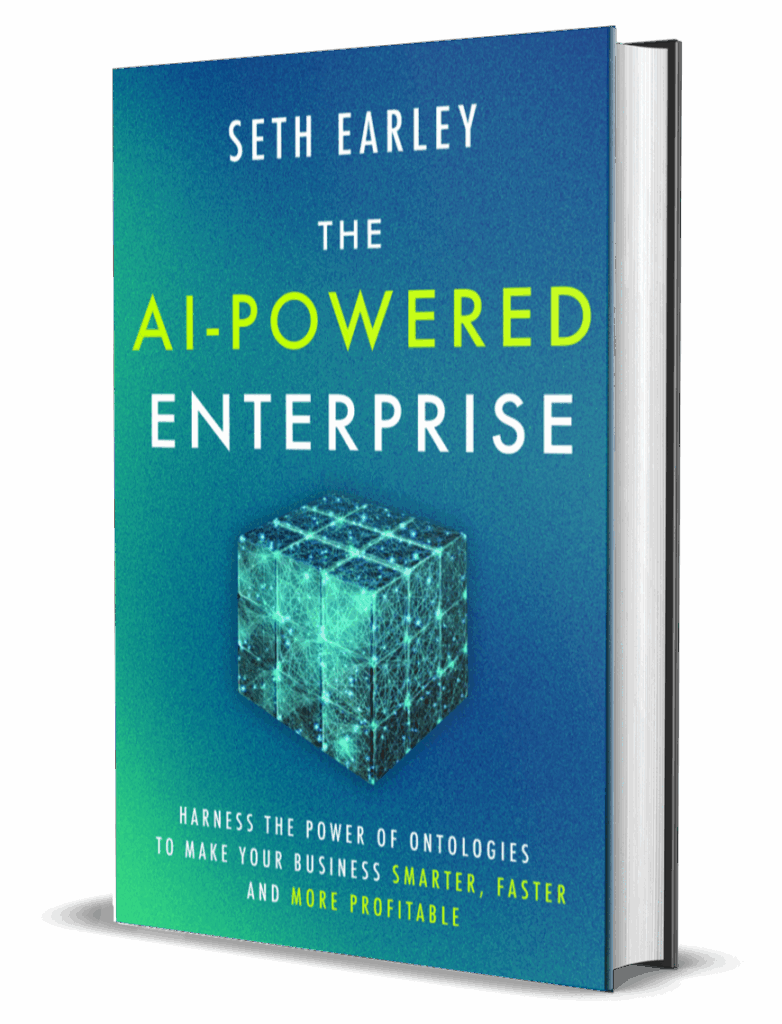
For The AI-Powered Enterprise, Seth Earley hired Jane Wesman PR. Seth and Jane worked diligently on promotional efforts. Despite the highly technical topic, Jane’s team found ample promotional opportunities for the author (and hired me to ghostwrite articles for the author to fulfill some of these opportunities). The result was a high degree of visibility over a sustained period of at least six months.
A good book without sustained, professional, effortful promotion is going to go nowhere.
Promotion doesn’t always work. But lack of promotion and weak promotion keeps books from reaching their potential.
Promotional help is expensive. But in the end, it’s even more costly to pay a writer to create an excellent book and let it hang out there unpromoted.