Vanity Unfair? How the Trump White House ended up looking like idiots in “Vanity Fair.”
Vanity Fair just published a two-part article on the brain trust surrounding Donald Trump. The writer, Chris Whipple, is the author of a book on chiefs of staff in the White House. The photos were by Christopher Anderson, an accomplished portrait photographer.
Trump’s advisors look very, very bad in this piece.
His chief of staff said that Trump “has an alcoholic’s personality” in that he thinks he can do anything. She also said she was “aghast” at Musk’s dissolution of USAID and that “no rational person” could think his process was good. She admitted Trump was in the Epstein files and said that Attorney General Pam Bondi “completely whiffed” her treatment of the Epstein release.
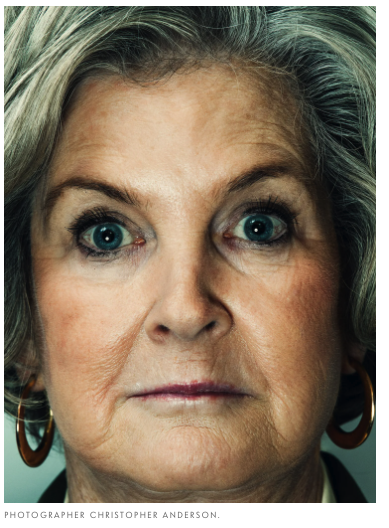
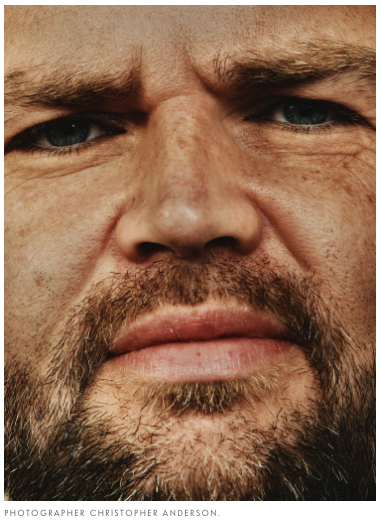
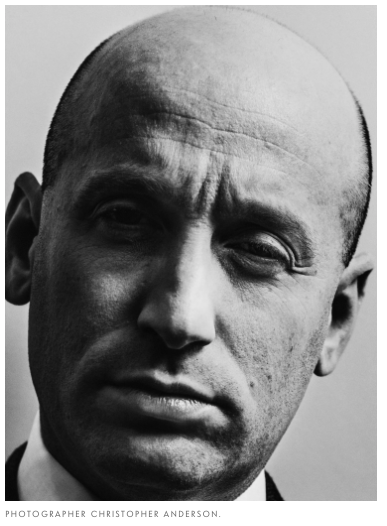
The lighting and posing choices in the photos make everyone surrounding Trump look crazed or evil.
Susie Wiles:
J.D. Vance:
Stephen Miller:
Here’s Vance again. Leaning against a brightly lit, shadow-filled wall next to a light switch and thermostat, he looks small and ordinary, in a badly tailored suit.
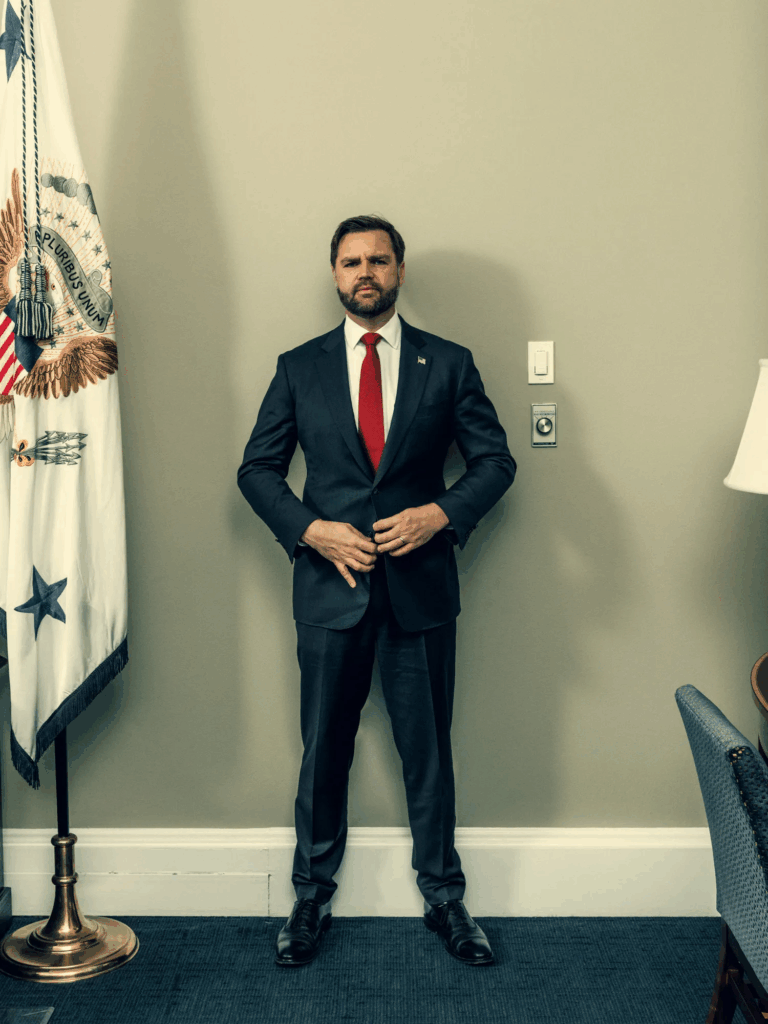
Who’s to blame for this? The White House communications staff.
You may believe that Vanity Fair did an unfair hit piece here. If so, you fundamentally misunderstand how the press works in America.
Any experienced PR practitioner will tell you that trusting journalists who appear to be friendly is extremely naive.
Nothing Vanity Fair did was beyond the boundaries of normal journalism. None of the quotes were inaccurate or off the record. The people quoted said what they said of their own accord. None of the photos is unfairly manipulated. This is how they look.
Vanity Fair‘s staff chose what to include and what not to. That is within their prerogative as journalists.
Trump’s people allowed this to happen out of ignorance. It’s public relations malpractice.
I learned this myself. In 1999, Jim Frederick, a writer for The New York Times Magazine, wrote a piece on Forrester Research and other analyst firms who make predictions about the future. We were delighted to be featured. But Frederick was intent on making light of our work.
Here’s a quote:
No one at Forrester or Jupiter claims that what he or she does is science. Instead, the companies simply maintain that while their methodologies may not be perfect, they are more thorough than anyone else’s. “Interviewing 50 people is not statistically valid,” concedes Frank Gillett, a Forrester analyst, discussing a favored Forrester research technique. But “somebody has to pull more than 50 people out of their hat to say that they know better.”
I’m featured in the article. Here’s what Frederick said about me:
From the companies’ point of view, there’s a good reason to get quoted saying something definitive. Josh Bernoff, Forrester’s man on the interactive-TV beat, declared earlier this year that personal video recorders (gadgets that are essentially more flexible, easier-to-use VCR’s) would mark “the end of network television.” In person, Bernoff is a bearded, heavy-set, quiet-spoken guy who looks quite at home in the academic environs of Cambridge. He is also thoughtful, whip smart and well aware of every move he makes with the press. That now widely quoted crack about the death of network TV? It turns out he didn’t really mean it. “I mean, there are still railroads, right?” he says now. What he really thinks is that network TV will lose about half of its market within 10 years. That’s an industry-transforming development, to be sure, but it’s not quite the end of CBS, NBC and ABC.
But, Bernoff explains, he’s not really talking to reporters for the benefit of the average reader. “It’s a very deliberate thing,” he says. “I want to say something that would make a potential client say, ‘Wait a minute, we gotta talk to this guy.’ If someone reads that, and it leads to a contract, then I’ve done a good job.”
This was in 1999. I was right. But I was way too honest in talking about why we talk to the press. I was very good at talking to the press about my insights as an analyst. I was not careful enough in talking to them about myself.
Here’s the picture I allowed the Times photographer, Erin Patrice O’Brien, to take of me:
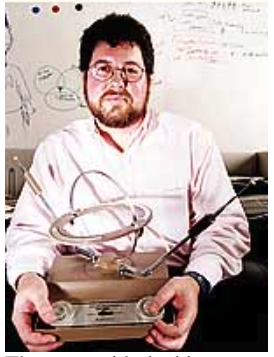
I regret posing in that way for that photo, with a drawing of a Star Trek crewman in the background. I look like an idiot.
I learned on the day that article was published that journalists have their own agendas. They call things as they see them. They may be very friendly, but it’s a mistake to treat them as your friends. They do not reveal their motives when you are talking to them. If you imagine they are friendly to you and they are not, it’s your own fault and you’ve behaved like a fool.
You would think the most sophisticated communications staff in the world, working in the White House, would know that most basic fact about how journalism works.
But you’d be wrong about that.
Amen to that! What comms stooges presided over that interaction? Actually feels like an “inside job” along the lines of the folks who were responsible for scheduling the unusually early debate between Biden and Trump in 2024. i.e. designed to be a massive failure in order to bring about a personnel change.