The cure for writers’ imposter syndrome (WIMPS)
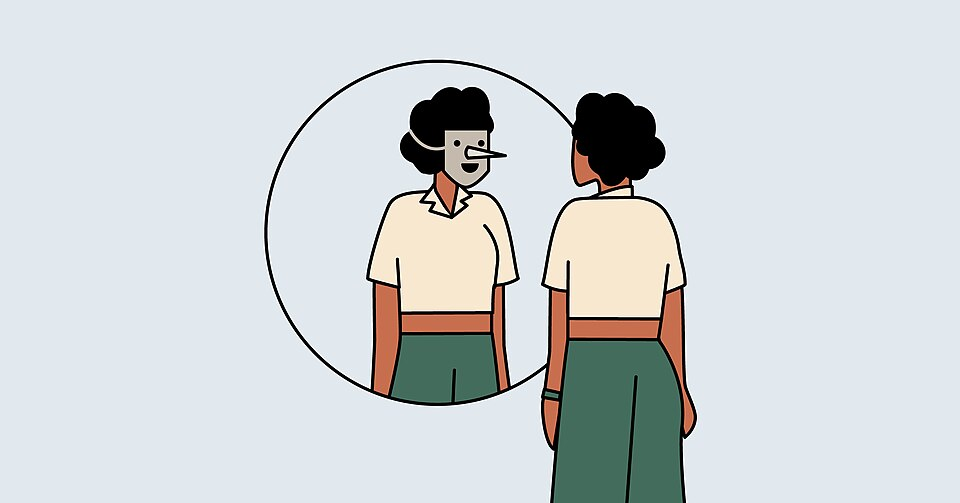
Writers tend to suffer from imposter syndrome. Writers’ imposter syndrome (WIMPS for short) comes with the territory. Talking to writers with WIMPS has made me think differently about my advice for emerging writers.
What I learned from networking with lots of writers
Since I moved from Massachusetts to Maine, I’ve lamented the loss of the local network of thinkers that I used to count on. So I was delighted to get invited to a gathering of the Maine Writers & Publishers Alliance. A couple of dozen of us joined a schmoozefest at a local brewery.
There was nobody there just like me — an established business writer. I met fantasy writers, essayists, journalists, and academics. Some people had active works in progress, while others were just getting used to thinking of themselves as writers.
I learned a few things. First, this group was extremely diverse in age and gender, and in the topics they wrote about. Second, writers love to connect with other writers; I found people extremely open and supportive. And third, of course, these people were really creative.
Lots of them also manifested insecurity about what they wrote.
Society doesn’t support emerging writers. If you tell people “I am a writer,” they assume that you’re a pretender, unless you’re one of the few who can point to several successful published works.
This means nearly everybody has WIMPS. It hangs over their shoulder injecting doubt into everything they do.
The cure for WIMPS is practice and feedback
My definition of a writer is simple: it’s someone who writes.
That means if you want to think of yourself as a writer, you should write. You should write regularly, at a time you set aside for the purpose. You should write with intent, whether that intent is just to practice a narrative, to explain what you believe, or to convince others of your belief.
My usual recommendation is to decide on your audience and what problem you are solving for them. Of course, that only works if you’ve practiced writing enough that, when presented with an audience and a problem, you have the confidence to write about the solution to that problem.
If you haven’t practiced enough, you might never get to that point. So practice really is useful, especially if you can get some feedback on what you’ve created. Blogging is a good way to get started, if you don’t have a regular editor or coach you can count on.
How this aligns with my advice about planning first
I’ve generally suggested that writers should spend time planning before they dive into writing. My advice to authors recommends this sequence:
- Develop the idea behind your book.
- Plan the chapters in your table of contents.
- Do the research necessary to write a chapter.
- Create a fat outline for the chapter.
- Draft the chapter based on the research and the outline.
This advice is designed to help reduce waste and writer’s block. Planning has lower stakes, so it doesn’t set off the anxiety that a blank page can. And it’s far easier to go from a fat outline to a draft than to write a draft from scratch.
But that’s not going to work if you’re regularly stalked by WIMPS.
Write a lot. Get used to it. Become a writer by writing.
Then, when it counts, follow my advice about planning first. Your writing practice will make it easier to go from step 4 to step 5.
Planning is still a good idea. But if you’ve got imposter syndrome, write your way out of it.
Because there are way too many good ideas to let WIMPS get in your way.
Paul Froiland was a favorite instructor in college. On the first day of a class I took from him, he said “If you want to look like a writer, get some clove cigarettes and a beret and go sit at a coffee shop. If you want to be a writer, get writing.”
After that class but while my career was still young, I worked mostly as an editor. Apparently there’s also a belief out there that one can “live like an editor” through wardrobe choices. https://schoolofselfimage.com/live-like-an-editor/
In other words, many of the people who feel like impostors shouldn’t, and many who don’t should.