The Celtics’ Payton Pritchard in flow
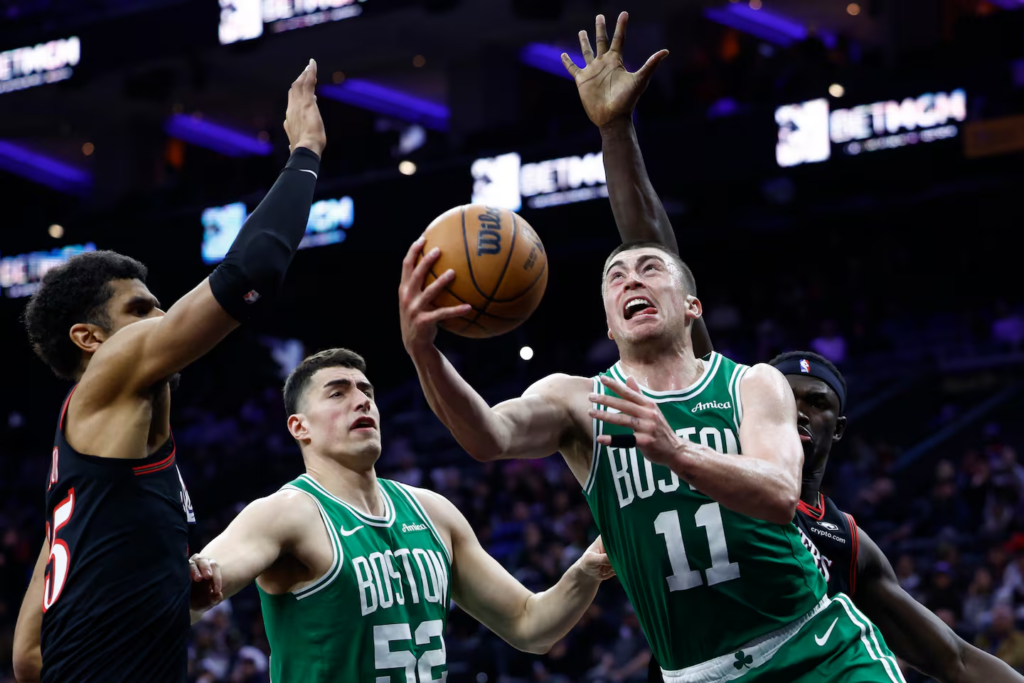
Payton Pritchard is a solidly built 6-foot 1-inch guard on the NBA’s Boston Celtics. Nearly every time he appears in a game, he’s the shortest man on the court.
In Sunday night’s game against the Philadelphia 76ers in Philadelphia, Game 4 of the first round of the playoffs, Pritchard scored 32 points in 35 minutes to lead all scorers — including the Sixers’ 7-foot Joel Embiid and the Celtics’ twin all-stars Jayson Tatum and Jaylen Brown.
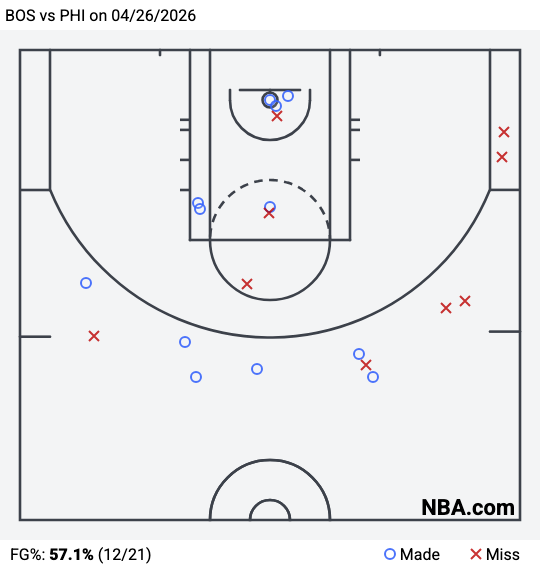
He hit three-point shots from distance all over the court. He snaked between defenders and laid it into the basket. He even hit a long-distance buzzer-beater shot at the end of the first quarter, with no time left on the clock, launched on one foot.
I was intrigued at how Pritchard described his performance. “It’s a good feeling, but it’s more of a flow state. I like to say it’s like, when you get in that flow stage, it’s the rhythm of how you dribble, in the moves you can get to, in the shot making, obviously, but it’s a good feeling, but I try to in my workouts, I try to hit that [feeling] on the daily. So then when I get in the games, it’s a regular thing.”
What is a flow state and how can you get one?
The Hungarian-American psychologist Mihaly Csikszentmihalyi invented the concept of a flow state. As he described it, flow occurs when the human mind and body are tapping into long experience, making steady progress, and overcoming obstacles on challenging problems. If it’s too easy, you don’t get flow. If it’s too hard, you get blocked or stopped and don’t get it either. But when your experience and skills are perfectly matched to the task at hand, you can do incredible things with intense enjoyment.
It certainly looked like Pritchard was in a flow state on Sunday night. As he brought the ball up the court, you could see him evaluating everything around him, especially the positions and movements of his opponents and his teammates. He dribbled, focused intensely forward, and the ball and his body seemed to be fused into a single graceful unit. There was no way for the others to predict what he might do next: drive to the basket, launch the ball to the hoop from 25 feet away, or pass to an open teammate (he had five assists). The Sixers had to be wary of the danger of Tatum or Brown scoring, which created openings for Pritchard. As he alluded to after the game, he sort of “blacked out,” and couldn’t even recall the moves he made or mugging for the announcers after the shot. He just became a scoring machine — and the other players or how tall they were or the crowd were just background information that his shot-making flow state could take into account.
How does this happen?
It happened because Pritchard took tens of thousands of shots in practice, creating muscle-and-brain memory of how it felt to hit long-range shots from anywhere on the court. It happened because he and his teammates put in hours of practice and games in such a way that he knew where they were likely to go and they knew what he was likely to do. “P is a gym rat,” Tatum said. “That’s one thing that’s consistent and constant about him always. He’s always gonna be in the gym, working on his game, working on his craft, trying to get better. It shows in moments like tonight because he’s just relentless in how hard he works.”
All that preparation and repetition was invisible in the moment — and all us spectators could see was what looked like an ongoing miracle — but none of it would be possible without the endless hours spent when no fans were watching. That’s the difference between wanting to take control of a basketball game and actually doing it — with 20,000 howling, hostile fans and a desperate opposing team powerless to stop you.
I will never play basketball with any skill. But I know what a flow state is.
When I write essays like this or book chapters, I’ve written tens of millions of similar words before. I’ve prepared with research and faced similar challenges — how to tell stories, how to integrate evidence, how to reveal insights, how to engage readers — thousands of times before. I don’t feel like I’m deciding what to write. I just write and the words flow out.
When I edit, I tap into the experience of the thousands of pieces of prose I’ve reviewed before along with everything that writers want to do and try to do and sometimes fail to do, and use that experience to decide exactly what sorts of changes to recommend. It’s not about helping writers to write like me, it is about helping them to write like themselves, only better.
I don’t know what you do. Maybe you’re a public speaker, or a manager, or a software developer, or an auto mechanic. What matters is, if you can get into a flow state, you can deliver a Pritchard-level performance and love doing it.
What it takes is Pritchard-level practice and Celtics-level coaching. It takes dedication not just when everyone is watching but when you are exhausted and bored and depressed and no one is watching. It takes endless failure and adjustment.
Payton Pritchard’s gift is not his height or his physique, it is his temperament. He’s not the star of the Celtics. But the the star players knew enough to get out of his way and distract the opponents when he was in a flow state and scoring at will. In the second half, when the Sixers became more tuned in to the danger that Pritchard represented, the rest of the Celtics took advantage and ran wild.
The Celtics won the game 128-96. They demoralized the 76ers. They now return to Boston leading 3-1 in the series, and the oddsmakers give the Celtics a 99% chance of winning the series. They’re favored to win the Eastern conference, and the second-most-likely team to win the championship. The team did that, but Payton Pritchard made a huge difference.
That could be you. It’s hard work to get yourself into position to be in a flow state, but the rewards are intense. Are you up to the challenge?
Thanks, Josh, for picking up on Pritchard’s flow state comment. I could tell just by watching him that he was in the zone. When you truly love what you do for a living and are great at it, this is exactly what it feels like. I find it sad that more people don’t find such joy in their work.
I wonder if flow/zone can include a performance where failure was ~43% of the effort?
Am I missing something?
A typical NBA 3-point percentage is 37% and overall scoring percentage is 48%. A player who makes 57% of his shots – including 50% of his three-point shots — is outstanding. (Remember, there are five excellent, very tall players attempting to stop him.) So in this case, yes, flow can include some failures, but far fewer than average. NBA games are won at the margins. Pritchard’s ability to score 57% of the time is pretty much why the Celtics won.