Iran war strategy; hacking Grokipedia; national book ban: Newsletter 4 March 2026
Newsletter 141. Is bombing Iran strategic, disruptive, or just chaotic? Plus, the emptiness of AI-generated mathematics, the Authors Guild labels human-created books, three people to follow, three books to read, and the coach that could get you back at the keyboard.
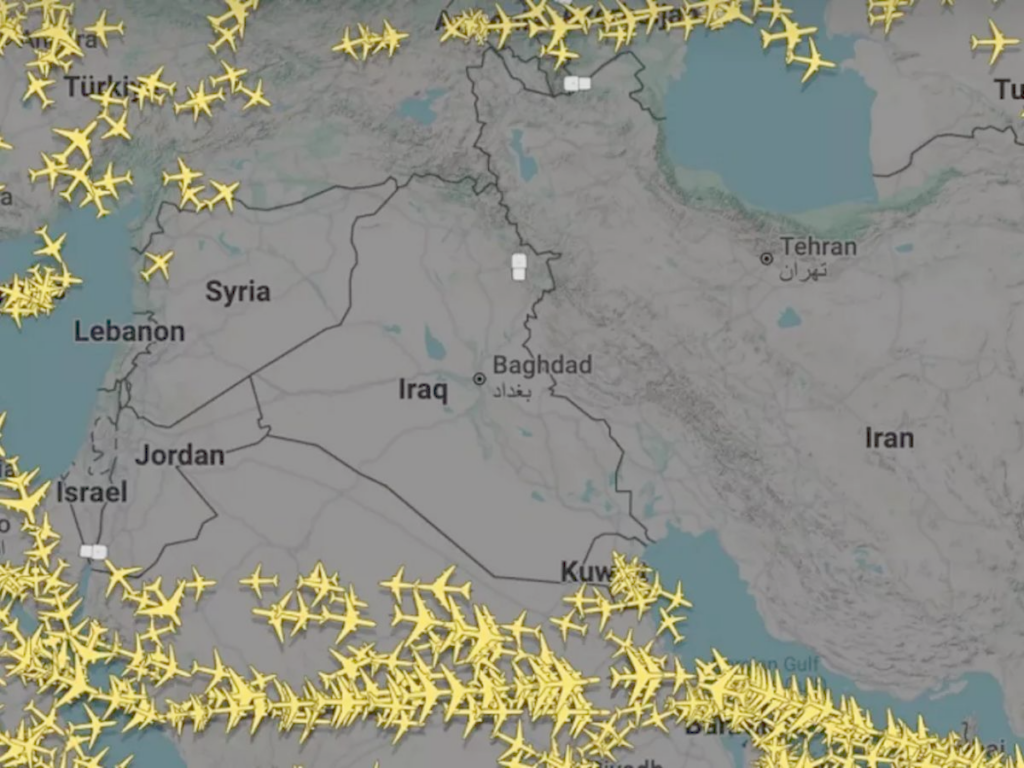
Is the Iran war a strategic disruption?
When you and your organization make a big decision, you’ve probably got a strategic objective in mind.
Strategic. Interesting word. It sounds fuzzy, until you look at the pattern of what people call strategic. A strategic action is simply an action taken now in the expectation of gaining an advantage in the future, based on an analysis of what is likely to happen.
A successful strategy needs these elements:
- A specific problem that needs to be solved.
- A specific plan: a set of actions intended to create a long-term solution to the problem.
- An analysis of scenarios: predictions about how the plan is likely to play out and the actions of the other entities that will react to the plan.
- Metrics that enable you to determine if the plan is succeeding, and make adjustments.
- Messaging to get your organization to work collectively to implement the plan.
As an analyst, I was a strategic advisor to senior decision-makers at technology and media companies. I helped with all of these elements, especially the analysis of scenarios.
These days, the most profitable strategies are often disruptive. A disruptive strategy is an attempt to replace the status quo in a market. A new entrant disrupting a market typically gives customers more of what they want, often at a lower price, than incumbent suppliers. Amazon Web Services (AWS), for example, offered computing power that required no capital investment, was infinitely scalable, and was resilient against failure. Amazon reasoned that its (very large) investment in data centers and cloud servers would pay off as startups and corporate customer chose to work with AWS instead of buying and maintaining their own servers. Amazon was right, and the result was a massive, hugely profitable business.
National decisions can be strategic and disruptive as well. For example, George W. Bush’s plans to go to war in Iraq and Afghanistan were strategic. His reasoning was that allowing terrorists to continue to operate in these nations was not in the best interests of the US, and that military action could create regimes in those nations that would no longer threaten the US. He had a plan to implement that strategic decision. It was disruptive as well, since it upended the status quo in the Middle East. You can argue that his analysis of the scenarios was flawed, as it didn’t sufficiently account for the cost of maintaining control of those countries, but it was conceived with a strategy in mind.
Based on this analysis, is Donald Trump’s choice to attack Iran strategic? Is it disruptive?
Let’s look at my tests.
- Was there a specific problem to solve? Yes. The problem was Iran’s potential progress toward creating a threatening nuclear weapon.
- Was there a specific plan to solve a long-term problem? Maybe. The actions taken in the last few days may have solved the problem of the cleric who was supreme leader of Iran, but at the cost of massive conflict in the region.
- Is there analysis of scenarios? No. I’ve seen no evidence that there are any predictions for what happens next. The administration has given multiple contradictory explanations of what they expect to happen.
- Are there metrics to assess how well it is succeeding? With no specified goal, there can be no metrics.
- Was there messaging about the plan? After it happened, there was little attempt to explain what we are doing or why. Eight minutes on Truth Social isn’t the same as an address to the nation. There was no significant effort to lobby Congress or our allies.
Is this action disruptive? Well, it obviously is disrupting the status quo. But to be strategically disruptive, there has to be a clear idea of what new order will be created and how that will advantage the US. Chaos is not the same as disruption. You can’t “win” chaos.
There is no way to analyze the strategy because there is no strategy. There is no way to predict the outcome, because it is chaotic. No one has taken the time to explain the goals and build public support. Our allies (other than Israel) are mystified and paralyzed.
The most eloquent critique of this poorly planned action comes from the noted statesman Donald Trump, as recently as last year.
“We will stop racing to topple foreign regimes that we know nothing about.” (2016)
“[I was] elected on getting out of these ridiculous endless wars.” (2020)
“We will measure our success, . . . perhaps most importantly, [by] the wars we never get into.” Inaugural address, 2025.
Donald Trump was historically right. Starting wars with no clear strategy is foolish, expensive, and deadly.
I have no idea where this war is going. But neither does this administration, and that’s the truly terrifying part.
News for writers and other who think
AI tools are creating new mathematical proofs. But they’re not generating insight. According to famed mathematician Terence Tao, “You just get right to the destination [the proof], which actually was only just a part of the value of solving these problems.” (The Atlantic, gift link)
David Meerman Scott suggests a back-door way to get found by AI search tools: insert yourself into Elon Musk’s Wikipedia alternative, Grokipedia.
On Jane Friedman‘s blog, Kirsten Bell (not the actress!) writes about how bad her book promotion partner was. To avoid this type of humiliation, interview several firms, choose publicists recommended by authors you know, remain closely involved in the campaign, and don’t expect it to be cheap.
The Authors Guild announced a certification program for books authored without AI. It’s self-censoring and unverified, so liars can apply it liberally. And according to its guidelines for use, “Use of generative AI to create a table of contents, indices, or other auxiliary parts of a book, or for researching, brainstorming, outlining, or any purposes other than generating text does not disqualify a work from being Human Authored.” (In case you’re wondering, all my blog posts are human authored. Honest!)
Republicans in the US House of Representatives announced a bill that would ban libraries from carrying books on LGBTQIA topics. It defines “sexually oriented material” as anything touching on “gender dysphoria or transgenderism.” Welcome to Gilead.
Three people to follow
April Dunford , the wizard of positioning
📚Michael Bungay Stanier , coaching uber-expert
Paul Graham , essayist on innovation and cofounder of Y Combinator
Three books to read
The Future Book by Mac Barnett and Shawn Harris (Knopf, 2026). Sure, it’s written for 4-year olds, but it’s just as valid in predicting the future as half the books I list here.
The Beginning Comes After the End: Notes on a World of Change by Rebecca Solnit (Haymarket, 2026). What have we done to deserve this future? And what can we do to fix it?
Experience is Everything: Making Every Moment Count in the Age of Customer Expectations by Jeannie Walters, CCXP, CSP (Mission Driven Press, 2026) The bedrock basics of the customer experience mindset.
Authoring made easier
The Bernoff Book Coach erases your confusion and replaces it with inspiration. Would you risk two bucks on that?