How editors should handle AI-generated manuscripts
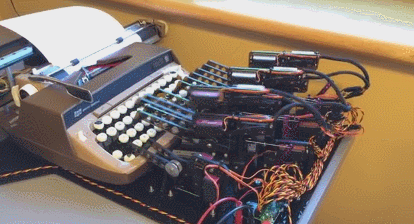
In yesterday’s newsletter, I pointed out that editorial experts are now cleaning up other people’s AI-generated messes. And I’ve now heard from lots of ghostwriters and editors that their clients are sending them content that’s clearly AI-generated.
If you’re given AI-generated text to edit, how do you need to protect yourself, and what should you do about it?
AI-generated content is harder to edit, because of its lack of humanity
Based on my experience, AI-generated text you’re asked to edit is likely to have these qualities:
- Well-organized and logical. AI tends to create content in which the sentences and paragraphs are well-formed, with no spelling errors. Of course, a lot depends on how the client has used it; hunks of content from a poorly designed set of prompts could be duplicative and self-contradictory (and yes, I have personally experienced this).
- Factual errors. AI hallucinates. You might catch some of these errors, but that’s generally the responsibility of the client or a fact-checker, not the editor.
- Plenty of annoying AI “tells.” These include em-dashes (overuse of these was a bad idea even before AI flooded us with them) and the classic “It’s not x, it’s y,” formulation.
- A boring, even tone. AI text tends to be predictable, which is unsurprising given that it’s generated by a predictive algorithm. This AI “accent” creates text that lacks emotional valence and could lull the reader to sleep.
Is this harder or easier to edit than regular text? Well, it’s less likely to have major structural problems, but you’ll have to carefully scrutinize every word. If the client wants the result to be copyrighted, then in theory you’ll have to rewrite every word, because AI-generated text cannot be copyrighted.
But it’s harder than that because of the psychology of editing. When I closely read a manuscript to edit it, at some level, I’m in communication with the author and their ideas and intent. That means I can edit it based on how well they are communicating those ideas and that intent. It’s a human-to-human job.
When I read an AI-generated text, there’s no human on the other end. That makes editing much harder. I’m not helping a human writer to shine, I’m substituting for the lack of humanity with my own creativity.
As a result, based on my experience with AI-generated text, it’s going to be at least 50% more work to edit for the same word count, compared with a well-written human-generated text. It’s not just the extra work. It’s the tedium of editing what a machine created.
Recommended tips for editors
As a result of all this, here’s what I recommend for editors:
- Include a clause in your contract that requires clients to reveal if they used AI to generate the content you’re editing, and if so, how.
- Specify in the same contract that you are not responsible for identifying or fixing factual errors, including factual errors introduced by AI.
- Review a sample of any text you’re editing before pricing the job. And test that sample with an AI detector. While such detectors can generate false positives, any text that tests positive for AI is going to be harder to edit, even if it wasn’t actually generated by AI.
- Decide if you’re willing to edit AI-generated text. Some editors may object for moral reasons, others may just decide that it’s too tedious to be worth doing.
- Specify in your contract that there is a 50% premium for editing AI-generated text.
- Further specify that if the client includes AI-generated text, you cannot be responsible for ensuring that the result is eligible for copyright.
These recommendations are designed for developmental editors, but could just as easily apply to other editorial professionals, such as copy editors.
Editorial professionals that I know increasingly encounter these situations — and generally were blindsided by them. Now that you know what you might encounter, you can be prepared.
Love that graphic. It screams “an awful mess.”
Thank you for these two articles.
We are experiencing the same issue in translation at the moment: editing humans “makes sense”, while editing an AI-enhanced text is really mind-numbing and time-consuming for humans (although AI is being sold and used as a “cost-cutting” device).
Absolutely vital points here! Thank you for your diligence in revealing such things to those of us with less experience with AI-generated material.
As an academic copyeditor, I have to laugh at the idea that human writers have more personality and are less likely to put you to sleep.
Ha! Scholars do have quirks, though. We have to give them that!
good one!
I should hope so!
Thanks for bringing this up. Glad to see editors talking about it but while I agree with so much of what you said, I am rather surprised to see you say that AI generated or assisted content is less likely to have major structural problems. To the contrary, AI leaves less room for checking grammar and correcting mistakes because it does a good job of cleaning up. However, the structure is critical to the story be it fiction or nonfiction and in the hands of most writers, nonwriters- there is very little clear and actual thinking done, which is why in AI manuscripts, there is no fresh or original thinking and storytelling. This makes my life as a big picture editor- structural, coach, etc way way harder. I pretty much tell these authors tha the copy hardly has any errors but what are you really trying to say? That core has just been flooded with slop, robotic-ness and whatever is a term to define what we are all facing together. All I mean is that the thinking chops are missing in the hands of most leaders/writers and as a big picture professional, I have to do more work on the idea and very little on the fineness.
If the author doesn’t care for how it sounds (similar/sloppy), perhaps they care for their reputation, relevance and impact; and that is why we can charge higher.
Naturally, whether they understand this or not will be subjective but yes we, the communications professionals and the editing community must inform them and educate them by calling them, writing about it, speaking about it when we meet them. Adding a line in the contract, is not enough given our stakes at this time.
I appreciate your thinking Josh and value your time. Thank you for reading this and I hope you understand where I come from is a place of concern for our tribe, not just myself.