Grammarly and editorial identity theft
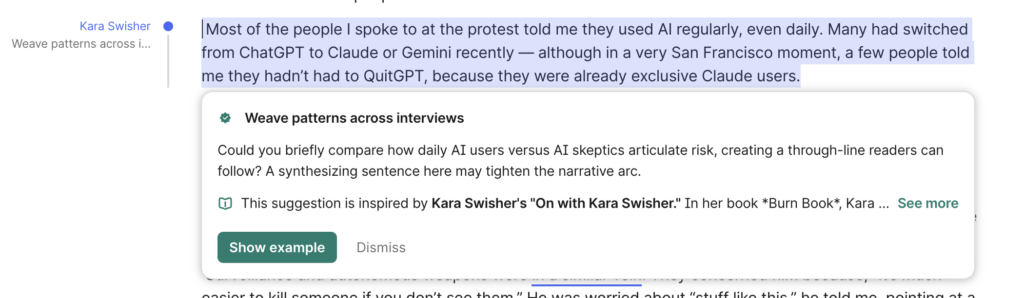
Grammarly has a fascinating new feature. It will make editorial suggestions in the persona of famous individuals.
Regrettably, they didn’t get any of these individuals’ permission to hijack their names and slap them onto editorial suggestions. The result has been a huge backlash including legal action.
The best writeup that reveals the absurdity of this feature comes from Casey Newton’s Newsletter:
On Friday I learned to my surprise that I had become an editor for Grammarly. The subscription-based writing assistant has introduced a feature named “expert review” that, in the company’s words, “is designed to take your writing to the next level — with insights from leading professionals, authors, and subject-matter experts.”
Read a little further, though, and you’ll learn that these “insights” are not actually “from” leading professionals, or any human person at all. Rather, they are AI-generated text, which may or may not reflect whichever “leading professional” Grammarly slapped their names on. . . .
[N]o one asked me for permission to use my name in this way, much less compensate me for whatever expert-reviewing labor my AI clone was apparently now doing on my behalf. (An annual subscription to Grammarly costs $144.)
I’ve long assumed that before too long, AI might take my job. I just assumed that someone would tell me when it happened.
As Newton vividly describes, Grammarly generates generic editorial advice — “Try starting with sensory imagery” or “insert a narrative digression” — and then labels it with the name of a famous writer or journalist like John Carreyrou (Bad Blood) with not even the most tenuous connection. When Newton brought this to the attention of the fierce and iconoclastic Kara Swisher, her response was perfect:
“You rapacious information and identity thieves better get ready for me to go full McConaughey on you,” Swisher told [Newton] over text. “Also, you suck.”
Not surprisingly, Grammarly just yanked the feature. But they really should have known better.
Fundamental principles
Try these on.
- You can’t use people’s names for promotion without their permission. You’ll get sued, as you should.
- “Editing in the style of [individual]” isn’t a thing. To do this properly, the individual cited would have to participate — which they presumably would do for appropriate compensation.
- LLMs now give excellent general editorial advice. That’s disruptive for Grammarly. Live by the tech, die by the tech.
Take charge of your persona
Grammarly went too far by incorporating the names of people into its product without asking.
But you can, of course, sort of do this already. Try loading a piece of content into ChatGPT and saying, “How would Josh Bernoff edit this?”
I’ve tried that. It doesn’t do what I do. I feel like my name is being taken in vain.
This sort of virtual identity theft is going to keep happening.
I predict the rise of more companies like Soqratic that empower you to own and profit from your own AI persona and content.
You can try and sit this trend out — and then go ballistic on the identity thieves, as Kara Swisher apparently would.
Or you can invest in creating your own online persona under your own rules.
Mo Ryan wrote an great response, but I wish I’d read your summary of the problem first. https://www.moryan.com/an-open-letter-to-grammarly-and-other-plagiarists-thieves-and-slop-merchants/
We’re in for endless enshittification of everything AI. Maybe it will help keep lawyers employed; I wonder how effective AI legal advice is against AI misuse??
A desperate act by a desperate company. The Coda and Superhuman acquisitions aren’t going to save it. I would be shocked if we’re still talking about Grammarly in two years.
“[Grammarly] really should have known better.” Grammarly and most (all?) other such platforms do know better, but they assume that no one will notice or care. After all, like lemmings off a cliff, aren’t we all rushing madly to become digital cyborgs ourselves, where originality will be defunct and creativity spurned?