Emotional editing
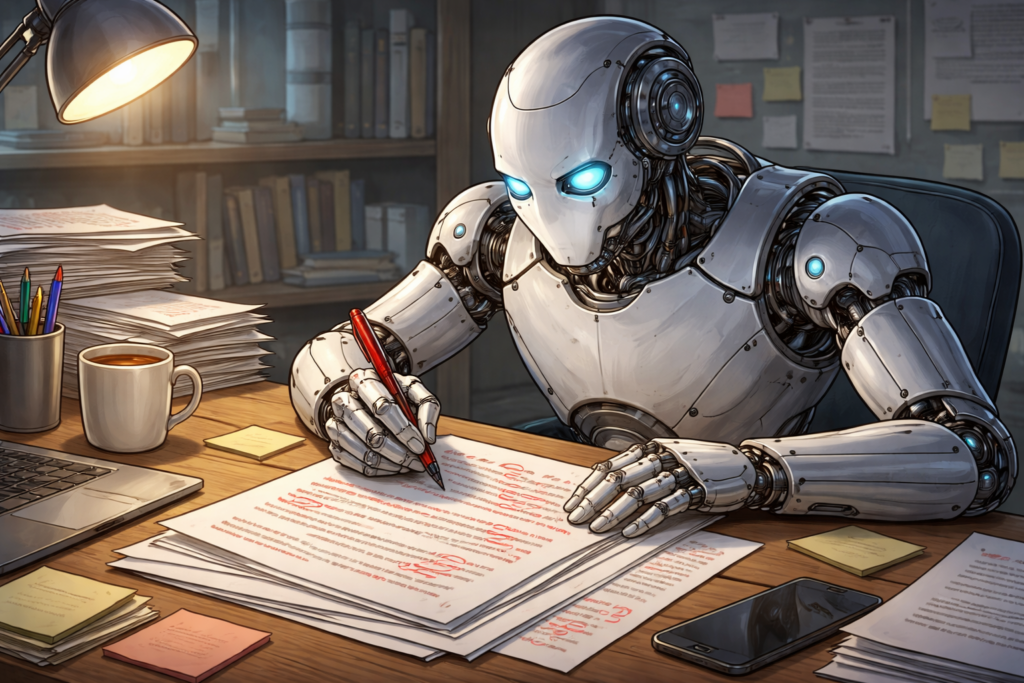
People think developmental editing is about improving words. It’s not. It’s about feelings.
I’m sure that sounds like it makes no sense. But it’s actually the most important thing an editor does, and no machine can do it.
How a developmental editor works
I start my developmental edit on your manuscript by reading it. As I read it, I ask three questions:
- How does this make me feel?
- Why does it make me feel this way?
- How could we use these insights to improve it?
How does this make me feel?
I start to consume what you wrote as a reader, not an editor. I want to experience it the way that any other reader would.
Words are supposed to be the province of the logical, verbal left side of the brain. But when I start to read, even as my left brain processes the words, my right brain experiences emotions. If the topic is interesting and the writing is effective, I may feel excited, intrigued, exhilarated, hopeful, or joyful. If there are problems, I may feel confused, bored, skeptical, angry, or frustrated.
Those negative emotions are signs that something is wrong.
Why does it make me feel this way?
As I take note of my emotions, my analytical brain uses its long experience with writing to figure out what’s causing the problems.
If I am bored, you probably wrote too long or were repetitive.
If I am confused, it’s likely that you failed to explain something well. You may have put the concepts in an order that’s not logical. Or perhaps some of your sentences themselves don’t make sense.
Skepticism signals that you failed to back up your arguments.
Anger or frustration happen when there’s clearly a strong idea there, but you haven’t quite connected that idea to the things that matter to me as a reader.
Anyone can read a draft and feel emotions. Your friends can probably give you feedback like, “This wasn’t convincing.” But the developmental editor’s job is to diagnose the problem more precisely. Like a doctor who sees a pattern of symptoms they’ve seen before, I try to get at the root cause of why and how the writing is sick.
How could we use these insights to improve it?
An editor who didn’t recommend ways to fix your writing would be pretty useless. But my experience gives me access to a collection of possible ways to make your writing better.
If it’s organized in a confusing way, I’ll recommend moving things around.
If it’s long or boring, I’ll tell you what to cut. Cutting can often turn flawed writing into great writing — you just take out the part that isn’t working, and the rest begins to shine.
If it’s not convincing, I can recommend places where evidence would make the case more effectively.
I’ve seen a lot of writing and read much more. This gives me a vast set of possible recommendations to apply. Apply the right one, and the writing becomes emotionally effective — enabling the next draft to captivate and inspire.
This is an emotional activity
I’ve always been talented analytically and deficient socially. I relate to words and concepts and meaning. No one who knows me would say that I’m much good at relating to people.
But until I wrote this, I didn’t realize how much emotional intelligence was involved in editing. I’m not reading things and thinking, “Parallelism error, passive voice, too-long paragraph.” I’m thinking “Confusing, not actionable enough, boring.” I diagnose the emotional problems caused by the writing and use edits and comments to suggest ways to make it connect better with the reader.
I often run text through AI tools and ask how it could be better. LLMs like ChatGPT are good at seeing problems that they’ve seen before. They can identify issues like lack of parallelism, uneven tone, malformed sentences, unsupported assumptions, and so on. These are real problems and fixing them will improve writing.
But AI tools are sadly deficient on the emotional side of writing and absolutely hopeless on the “why,” because they understand patterns, not people.
They don’t get frustrated, bored, or angry at writing like I do. They don’t understand what’s wrong with writing that is technically perfect but emotionally flat. They interpret creativity as error — since creativity is by definition writing that breaks a pattern. They don’t know the difference between gonzo/incomprehensible (needs fixing) and oddball/intriguing (needs nurturing).
ChatGPT’s edits offend me
When I fed the text of this post into ChatGPT, it caught a bunch of errors. It made a bunch of suggestions. For example:
This line is excellent but could be elevated:
They don’t know the difference between gonzo/incomprehensible (needs fixing) and oddball/intriguing (needs nurturing).
Consider expanding it slightly:
They treat deviation as error. But sometimes deviation is voice.
That’s clever. But it’s not me. I bet you never read the words gonzo/incomprehensible before. Maybe those words aren’t the right words. But they certainly caught your attention.
It suggested a change in the opening:
Developmental editing isn’t about words.
It’s about what the words do to a human being.
There are two problems with that. First, it’s not actually my point. And second, “It’s not x, it’s y” is an AI trope. Gag me.
It suggested cutting this:
I’m sure that sounds like it makes no sense.
But in the second paragraph of the piece, I want you, the reader, to know I realize that the idea that editing is about emotions seems crazy. I want to lean into that, not rush past it.
And it suggested adding:
After reading thousands of pages and diagnosing hundreds of manuscripts, I have a large mental library of solutions.
True. But braggy. Implicit in what I wrote is the idea that my experience has suited me well for this work. I want to focus on the idea of emotional editing, not how skilled I might be. That suggestion would make this piece about me, and that is not where I want your attention — I want you thinking about the idea.
ChatGPT’s suggested edits ended with this:
If you’d like, I can rewrite it as a tighter 900–1,000 word version that keeps your voice but increases authority and flow.
No, you can’t. Because you have near-infinite experience but no emotions. I don’t care about authority. Flow seduces, but text that interrupts flow make people pay closer attention. ChatGPT, you’ve missed the point.
As a developmental editor, you’re a talented robot, and nothing more.
Is my job as a developmental editor safe? Maybe not. But it should be. Because the emotional side of editing is how books and authors achieve greatness.
That’s a job no machine is quite up to yet.
An excellent column, Josh. You again said what many of us have been thinking about writing, editing and AI.
Empathy, that basic human trait, taken for granted throughout millennia, is now prized. Excellent connection between our capacity to feel and developmental editing. Your viewpoint really impacts my perspective on my work.
Brilliant! You have a flair for pointing out concrete aspects of what is still abstract to most of us.