Edge seekers; ghosts outwrite LLMs; Perplexity privacy perfidy: Newsletter 15 April 2026
Newsletter 147. If you want to build business, go out on the edge where it’s not completely safe. Plus, book launch weariness, 100,000 Anthropic plaintiffs, three people to follow, three books to read, and how to connect with me at the IBPA conference.
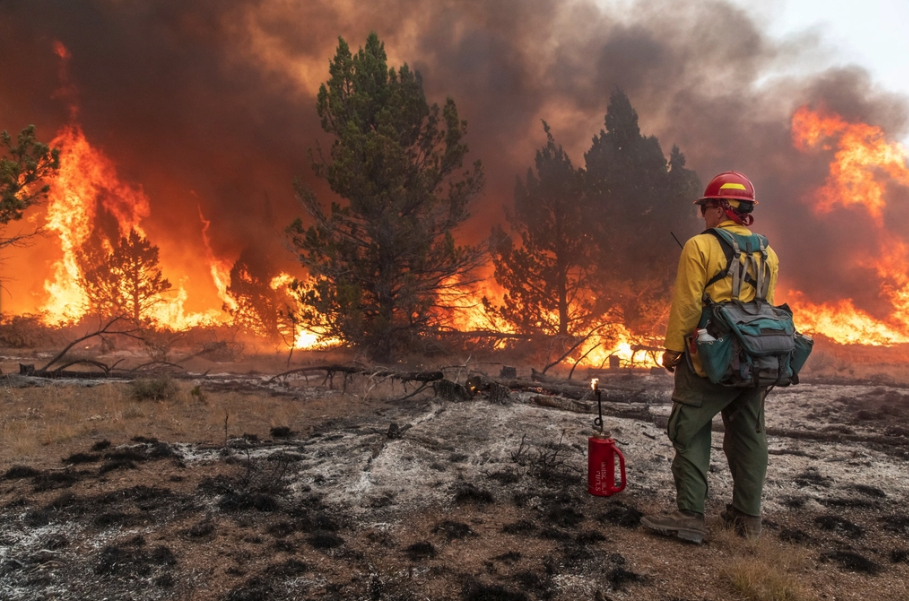
Get to the edge. That’s where the heat is.
As an analyst, I developed an instinct for what sort of problems to focus on.
A prerequisite: To do this, you have to be connected. You have to talk to people in your market and outside. You need to connect with other thinkers. You have to have some familiarity with what’s shifting in technology. Basically, you need to have your antennas up regarding what’s happening in your space that’s generating unanswered questions.
Right now, my space is authoring and writing. All day long I talk to other editors, publishers, ghostwriters, writers, and prospective authors. We’re not just passing the time of day and being nice. We’re trying to share where the pain is in our jobs, what’s challenging us, what insights we’ve developed, and what unknowns are keeping us up.
In the nonfiction writing space, here’s what’s on people’s minds, generally speaking:
- Traditional publishing is shrinking and becoming more risk-averse. So people are very interested in hybrid publishing and self-publishing.
- People read books less than they used to. Does this mean books are less effective? That they should be shorter? Which books are worth writing and publishing?
- Writers of all kinds are under pressure because their managers expect them to be more productive with AI. But nearly all of the ones I talk to feel less productive, because AI-generated text makes their jobs harder.
- Lots of editors I talk to are being asked to edit AI-generated text. They hate it, because it’s soulless and not easy to, er, unslop. When I tell them I charge 50% more to edit AI-generated text, that seems to resonate.
- The question of which uses for AI are appropriate for writers and which should be prohibited is always on people’s minds. There’s a consensus that AI-generated writing isn’t much good, but what other uses are allowable is the subject of lots of disagreement.
- There’s lots of discussion about how people who collaborate on writing — coauthors; ghostwriters and their clients; or authors and publishers, for example — should communicate with each other about the use of AI.
Given this buzz, I am concentrating on investigating and writing about (1) allowable and productive uses of AI for writers, (2) how writers communicate about their AI use, and (3) editing AI-generated text. AI interests me, but that’s not the point. The point is that AI use is where the pain is and where the unanswered questions are.
You can always make a living doing the same thing lots of other people do, using the same set of tools and techniques. But that tends to get boring and repetitive. It’s also where the competition is, which keeps a lid on how much you can charge.
On the other hand, people who branch out into spaces that are confusing, filled with conflicting viewpoints, and rapidly changing can make a name for themselves. They can stand out from the mass of people doing the same thing. And they develop a set of skills that is, at least for a short time, unique. This allows them to charge a premium for their knowledge.
The downside is that you can’t do this without being constantly in touch with what’s going on and what’s changing. It also means that you’ll develop ideas that will turn out to be wrong, because that’s what happens when you take a leap into the unknown and unknowable.
One more thing. If you think you can clearly see what’s happening, you can begin to assess what’s going to happen next. You can almost see around that corner. That’s the analyst’s purview, and it keeps that analyst intrigued and in pursuit of new facts and research. That’s way more fun than doing the same thing again and again with a steadily obsolescing set of tools.
Consider your space. Who’s in it? What are they talking about? What are they concerned about? What don’t they know that they’d like to know? And what’s going to happen when they finally figure out how to deal with the unknowns that are bothering them daily?
If you’re a strategic thinker, that’s where you should be concentrating next.
Because that’s where the heat is, and it’s what will keep your work interesting and lucrative well into the future.
News for writers and others who think
Jenn Donahue, PhD, PE , author of the recently published Becoming the Warrior, writes about the weariness of introverts facing the demand for self-promotion in a book launch.
From The Atlantic (gift link): “Ghostwriting may be threatened by LLMs, but these tools offer only a shadow of a shadow of the service a real-life writer and editor can provide.” For true prose artistry, humans with a story to tell need help from a human storyteller.
In Ars Technica, a lawsuit alleges that everything you type into AI search tool Perplexity is shared with Google and Meta.
On the Writer Beware blog, a comprehensive update on the legal settlement between authors and Anthropic. Nearly 100,000 authors have registered claims. The class participation of 54% far exceeds the 10% norm in class-action suits.
Kindle devices from 2012 and earlier will no longer be able to download new books from the Kindle store. The books they already downloaded will continue to work, in case you want to reread your copy of Wuthering Heights for the eleventh time.
A computer scientist and a lawyer examined the “fair use” exception that AI tools use for training on copyrighted materials and conclude that it’s inadequate. If they’re right, nearly the whole foundation of all large language models would be destroyed.
Three people to follow
Charles Duhigg, brilliant writer and explainer of human behavior (The Power of Habit)
Todd Henry, author and coach on the art of being creative
Michaela Cavallaro, executive editor at Maine’s The Writing Company, producing powerful content for hire
Three books to read
Screen People: How We Entertained Ourselves into a State of Emergency by Megan Garber (HarperOne, 2026). What happen when we cede our reality to spectacle.
Days of Love and Rage: A Story of Ordinary People Forging a Revolution by Anand Gopal (Simon & Schuster, 2026). How six Syrians helped overthrow a dictatorship.
Making Art and Making a Living: Adventures in Funding a Creative Life by Mason Currey (Celadon, 2026). How great writers, artists, and composers — from Kafka to Virginia Woolf — survived without starving.
Will I see you at IBPA Publishing University?
Authors and publishers: I’ll be at the Publishing U conference of the Independent Book Publishers Association, May 14-16. I’d love to connect with you there. I’m flying from east-coast Portland to west-coast Portland to be a part of it. Message me and let’s set it up.