A freelancer’s attitude: Lead with service, not with services
Here’s how I behave as a freelance service provider:
- If you’re serious about being a nonfiction author, I will try to help you — regardless of whether I can make any money from it.
- If you need something I charge for, I’ll quote it for you, and we may end up working together. (In my case, that means idea development, editing, coaching, ghostwriting, creating an index, or conducting and analyzing a survey.)
- If you need something I don’t do but others do, I will refer to you to them. Anybody I refer you to does a good job.
- There are limits. I only do one discovery call per potential client. I won’t read your 60,000 manuscript for free. And I’m not a psychotherapist.
A lot of service providers work like this. We give away a lot of advice for free. We lead with service, not with paid services.
Your attitude makes a difference
There’s a right and wrong way to approach a service provider like me. Approach us the wrong and way and you’ll try our patience — and damage your reputation. Approach us the right way and you’ll find the experience rewarding and delightful. Here’s what I expect from clients:
- No, you cannot “pick my brain.”
- Don’t approach me unless you’re serious about your work. To make the best use of both of our time, wait until you have some idea what you want to accomplish.
- It costs nothing for you to act grateful about the free advice. If you treat me as if you are entitled to it, that’s not the best basis for our relationship.
- Don’t complain about the price. We can negotiate the scope of the work, but whining won’t get you a discount.
- Don’t complain when I tell the truth about the publishing industry. I didn’t make it the way it is, I’m just explaining it. This is where I make my living, so no, I won’t join your crusade to denigrate publishers or retailers or the people who work for them.
- The same applies to limits on what can be copyrighted, whether you can publish song lyrics without permission, the poor quality of AI-generated text, or the rules of grammar and style. I follow and explain those rules. If you don’t like them, don’t blame me.
- I am a human being. I have opinions. Many of them are based on my expertise, some are based on my experience, and some are based on my values. You don’t have to agree with me, but don’t expect me to change to agree with you.
- Your publisher will disappoint you. Your publicist will disappoint you. That usually doesn’t mean they did a bad job, it means you expected too much.
- I will never disappoint you. But if you don’t enjoy honest criticism of your work, I’m not the editor for you (and you’re missing an opportunity to get better).
- If you’re in a rush, I’m in a rush to help you. If you’re slow, don’t expect me to rush to make up for you.
- If you don’t have a sense of humor, you’re not going to enjoy working with me as much as the people who do.
It’s a relationship
You’re an author. I’m a solo service provider. Working together is a person-to-person relationship.
I’m much more interesting to work with than a big company, and you’re much more interesting to work with than one, too.
So let’s try to make the most of this, shall we?
Touche!
(It’s kind of sad that we constantly need these reminders of the real world …)
These points should prove useful for any of us who edit or otherwise smith (or smite?) words. (Smiths do smite, don’t they?) I’m saving this post into one of my folders for future reference.
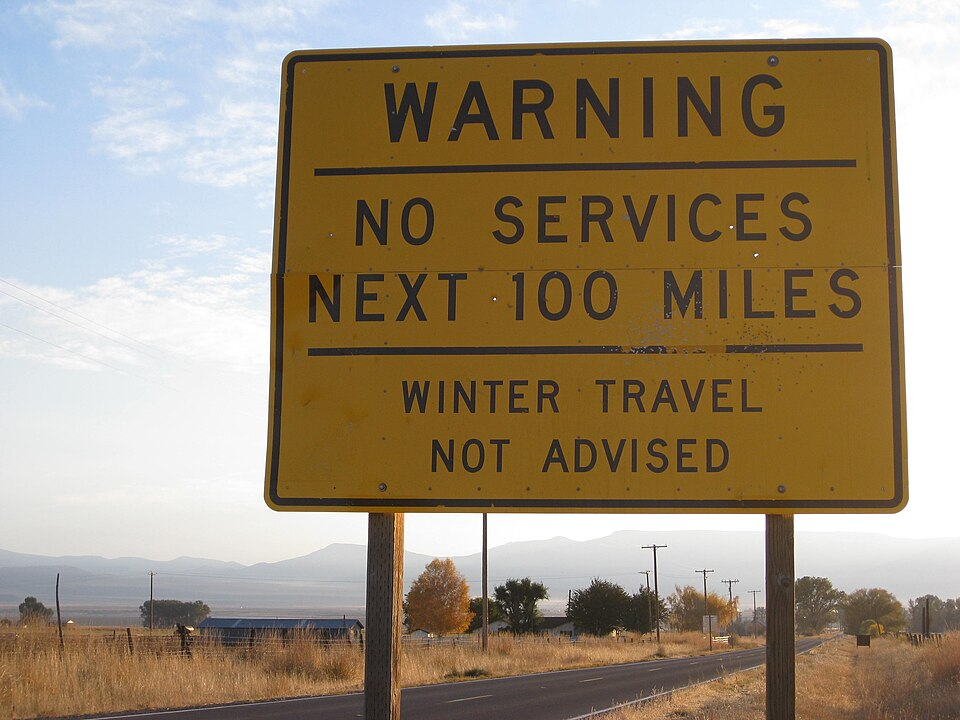
Your graphic reminds me of The Airline (Route 9, across the woodlands between Bangor and Calais), over ninety miles of wilderness. At that time, it was a courtesy, when you headed out on The Airline (from either end), to wait for at least one other automobile to come along; then the two would travel together. If one broke down, the other was available to go for help.
When I worked for a Bucksport paper company back in 1975. I drove over that route every day for that summer. I watched the first installation of utility poles that covered a sixty-mile gap. Every day, the men digging holes and installing utility poles were a mile or two farther down the road.
Later, when I worked in Machias, the head County Commissioner of Washington County showed me the survey log book for the original laying out of The Airline – in 1827 – complete with a hand-drawn and watercolor-painted, accordion-folded map (about 4 feet long) pasted into the back of the book. Seventy-six years before the airplane was invented, this route was dubbed The Airline – a stage coach road more direct across eastern Maine than the coastal route – because the advertised trip was compared to flying like a bird. The dirt track through that wilderness was never bird-flight smooth, over ledge and past swamps, sparse cushioning topsoil along most of it. One of my brothers who lived in Calais nicknamed the little town of Meddybemps, near the eastern end of the (then-paved) route, “Muddybumps.”