The Maxwell House Passover Haggadah: A brilliant early content marketing innovation
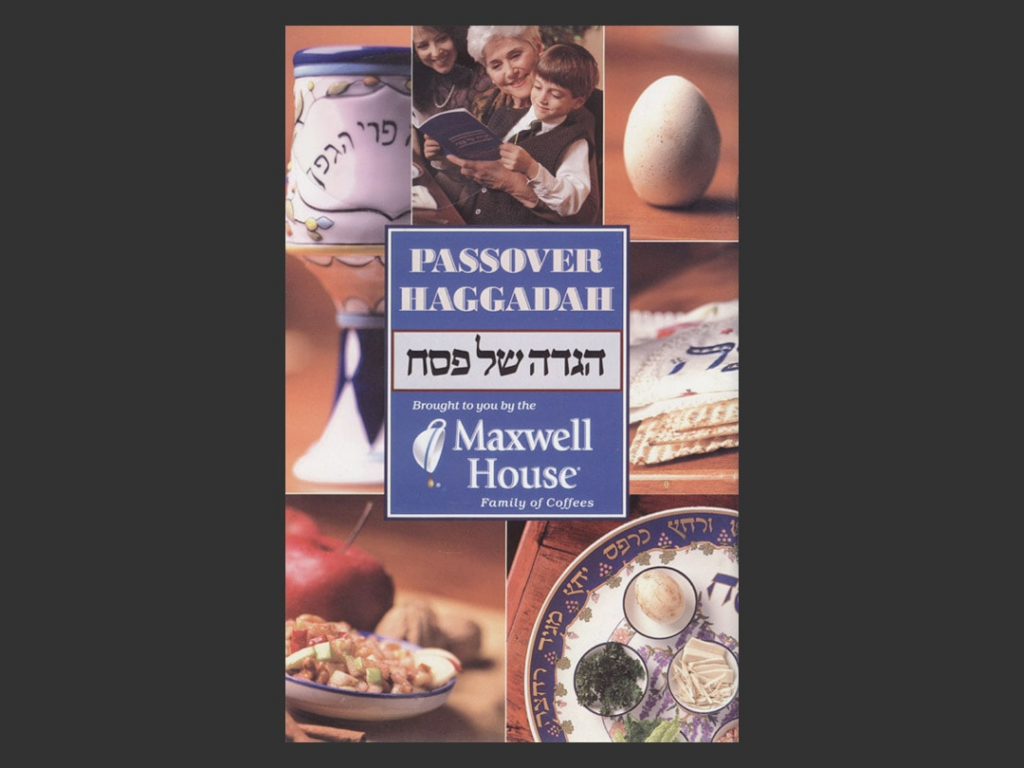
For decades, American Jews preferred Maxwell House coffee. This happened in large part because of a brilliant marketing strategy pioneered by Maxwell House and its advertising agency, Joseph Jacobs Advertising, which gave out a free Passover Haggadah — the small book used during the Passover celebration — with cans of its coffee. I’ll make the case that this was one of the most innovative content marketing strategies ever, long before the internet even existed.
What is a Haggadah and how do Jews use it?
Passover is a holiday that Jews celebrate every spring. (In Hebrew, it’s Pesach, pronounced “pay-sokh” with guttural throat-clearing kh-sound at the end.) The center of the celebration is the seder, a meal in which extended families get together to retell the story of how Moses led the enslaved Jews out of Egypt and across the Red Sea to the promised land. If you’ve read Exodus in the Old Testament or seen movies like “The Ten Commandments” or “The Prince of Egypt,” you know the basic story.
Passover has a central role in American Jewish life. While Christians like to point to Chanukah as the parallel holiday to Christmas, I’d argue that Passover is the more appropriate comparison — it’s the one time extended families get together, there’s a big feast, and if there’s one Jewish holiday you celebrate as a family, it is likely Passover.
At the seder, family including elders and children read together from a book called the Haggadah. The Haggadah reading includes parts for the leader, who sits at the head of the table and directs the events, but also for participants who take turns around the table reading. You are encouraged to treat the story as if you, personally, were in Egypt experiencing these events, suffering slavery and being rescued by God. You read together about the bitterness of slavery, how Moses was raised by Pharaoh’s family, the plagues unleashed by God upon the Egyptians to force them to yield, and the Jews’ panicked exit from Egypt.
The meal is integrated into the story. You hear the four questions about what makes this night different from all other nights. You eat sacrificial foods like charoset, which is made from apples, nuts, and wine and resembles the mortar the Jews used to build the pyramids; moror, usually horseradish, the bitter herbs to represent the bitterness of slavery; greens dipped in saltwater to represent tears; matzo, the unleavened bread that the Jews had to take with them since there was no time for the bread to rise; and of course multiple cups of wine. There’s also a lot of off-key singing (Dayenu, “It would have been sufficient,” is the most celebrated song).
Coffee is not on the list of commemorative foods, but I’ll get to that in a moment.
For this all to work, everybody around the table needs a Haggadah, so we’re all reading from the same book. Jews in America found themselves in need of a dozen or so copies of the Haggadah for each seder. That’s where Maxwell House identified its opportunity.
The Maxwell House Haggadah
Observant Jews refrain from eating leavened bread or other leavened foods for eight days starting with the night of the seder, to help us remember the challenges that our ancestors had in Egypt. There are religious rules about which foods are allowed and which are not during the Passover period. In the 1930s, a new rabbinic ruling was issues about what types of coffee were permitted. Maxwell House created one of the first kosher-for-passover coffee varieties.
Joseph Jacobs, founder of the ad agency for Maxwell House, recognized an opportunity. Maxwell House would make paperbound copies of the Haggadah available with the supermarket purchase of its coffee.
The design of this Haggadah was essential to its eventual success. While the commentary around the seder was traditionally in Hebrew, most American Jews were not Hebrew scholars. As a result, the Maxwell House Haggadah included both English and Hebrew narrations. Since the purpose of the seder is to reinforce the story in the minds of everyone attending, including children, telling the story in English became far more common among American Jews. The prayers and blessings in the Maxwell House Haggadah are in Hebrew, but with English transliteration to ease pronunciation for those whose Hebrew is rusty or nonexistent. In later editions, there were innovations like lively illustrations and two colors of text to make it easy to tell when the leader was supposed to be speaking and when the text would be read by one of the participants at the table.
From my recollection, the English translation was almost lyrical, with responsive readings, vivid descriptions, and lessons you would never forget. I’m sure this is colored by my memories from reading the same text almost 100 times at seders throughout my childhood and adulthood.
The translation and the order of the text in the Maxwell House Haggadah were carefully supervised by rabbis and of course, included no sly asides about drinking coffee. But the cover showed that the Haggadah was presented by Maxwell House, good to the last drop. In the edition I recall using throughout my childhood and adult years, the English was on the left side, the Hebrew started right-to-left from what you’d usually think of as the back cover, and the spread in the middle was an ad for Maxwell House.
It’s difficult to describe just how essential the Maxwell House Haggadah was to American Jews’ celebration of their most essential family holiday. While there are thousands of versions of the Haggadah, every Jewish family I knew used the one from Maxwell House. As we planned where we would go for seders on the first two nights of Passover, someone was always in charge of gathering up the Maxwell House Haggadahs and bringing them to the event. As I grew from childhood to adulthood I saw the same copies, usually with a few food or wine stains, brought out and shared with my grandparents, then used for seders at my parents’ house. When I led my first seder — a really significant event in my life — I of course made certain that my parents could bring along enough copies of the familiar Maxwell House Haggadah. It may not have been as essential as the matzo, but in my mind it was just as important.
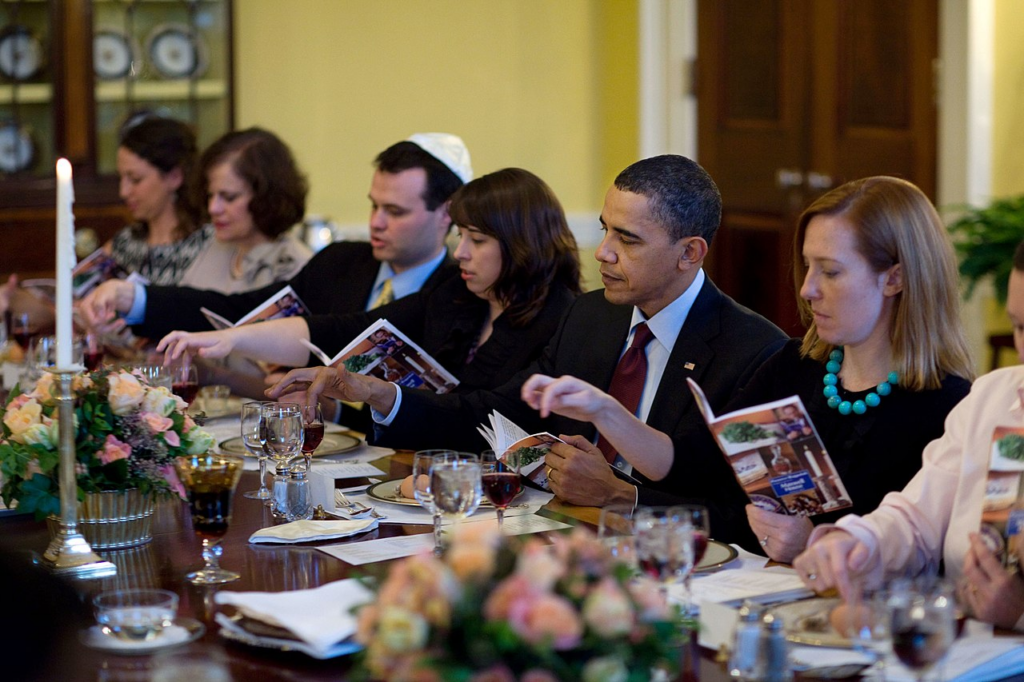
According to the Joseph Jacobs agency, over 60 million copies of the Maxwell House Haggadah have been printed. It’s been used everywhere you can imagine, including at a seder at Barack Obama’s White House. And you can be certain that there are copies stashed at the home of nearly all the Jewish families who are celebrating Passover at this time of year.
Maxwell House’s content marketing
Content marketing is the creation of useful content intended to attract web traffic and confer marketing value to the company that created it. It’s an essential part of marketing for any modern company. Blogs are a good example.
Of course, there was no Google and no internet in 1932 when Maxwell House decided to invest in creating a useful Haggadah for American Jews. As a result, Maxwell House had to depend on another distribution channel — grocery stores — to get its Haggadahs into the hands of American Jews.
But the result of that effort is that at the warmest holiday of the year, when families are embracing each other, remembering their history, reinforcing their fellowship, and preparing the most celebrated meal of the year, they’re all holding a book that discreetly mentions one brand of coffee. At first, Jewish housewives may have bought the coffee because it was kosher for Passover and came with a free Haggadah, but after a while, they were buying it because it had become traditional. And Maxwell House is still giving out copies for free.
It became a habit — every spring, you’d shop for the foods to make the seder, dig out the Maxwell House Haggadahs, and prepare to make enough coffee for everyone at the table. You didn’t have to think about what brand of coffee, because of course it was Maxwell House, it said so right in the book in everybody’s hands around the table.
Unobtrusive. Useful. Pervasive. And eventually, habitual. That’s the most effective content marketing I’ve ever seen, and it didn’t even need a web browser or a search engine.
WOW. How fascinating!
This is awesome! I can see and smell the ones from my grandparent house and seder table (typically somewhat stained with red horseradish).
What a great story. Thanks for sharing, Josh
What a wonderful story! I am writing a historical novel that takes place in Jerusalem during Jesus’ last days on Earth, and the Passover seder is part of one chapter. I have ordered a copy of the Haddasah so I’ll have a better understanding and depiction of that ceremonial meal.