Social media redeemed; author scams; anti-prime day: Newsletter 7 October 2026
Newsletter 171. An appreciation of the flawed but still essential social platform, LinkedIn. Plus, all the ways scammers use AI to target authors, Anthropic’s gravity-defying IPO, book bans set a record, three people to follow, and three books to read.
The value of social media
I’ve been studying social media for almost 20 years now. It had such promise when it exploded in the mid-aughts. Since then it’s become an addictive, spam-filled, and sometimes toxic environment brutally controlled by corporate behemoths.
Among authors and other “thought leader” types, there’s sometimes a tendency to treat social media as a necessary channel to exploit for promotion and attention. Accumulate a few thousand followers, reverse-engineer the algorithm, and then flog whatever you’re selling to them.
But having lived through the flash-bang of MySpace, the rise of blogs, the evolution of Facebook, the rise and rot of Twitter/X, the burgeoning of Instagram and YouTube, the breakout of TikTok, the crescendo of podcasts, the crackle and pop of SnapChat, and the emergence of Substack and LinkedIn, I’m still here. Not only that, I like being here.
People like me — solo experts in focused areas of knowledge — need a way to connect with others. I don’t mean “market to” or “influence” either. I mean connect. The life of a speaker, an author, or a thought leader can be lonely, since we spend so much of our time on solitary activities: conducting research, conceiving ideas, writing, and traveling. The cure for that loneliness is community — or in my case, communities. I am a member of the communities of authors, of editors, of writing and publishing experts, of current and former analysts, of bloggers and podcasters and thinkers.
While there are certainly conferences for these folks, I maintain those connections every day. My preferred channels are my blog and LinkedIn, but I certainly know people similar to me who are more committed to Instagram, TikTok, or Substack.
People like us share. We post ideas. We ask for help and connections. We are intensely interested in what our fellows are doing and experiencing. We celebrate their triumphs and empathize with their challenges.
I invest in that network. I create content (you’re reading it now) and share what others have created. I help anyone who legitimately needs the kind of help I can give, and refer them to others who can help them, too.
Thanks to LinkedIn, I know what every client I ever worked with is doing and creating. I have watched the hiring, layoffs, and recombinations of my thousands of ex-colleagues. Just as important, they know me. Somehow, anyone in that extended network who is writing a book seems likely to come to me — maybe just for advice, maybe to hire me. This happens often enough that it allows me to make a good living without the need for any outbound marketing at all.
LinkedIn in particular gets a bad rap. It’s filled with scammers and spammers. It’s been overrun with AI-generated vacuous comments. The algorithm shifts in mysterious ways. Like any neighborhood, it has its dark corners, dirty disused lots, well-trodden dead-ends, blowhard assholes, and disturbing conflicts. Despite all that, it’s filled with fascinating people who are out on their stoops making conversation.
There are few hundred people like that whom I’m regularly connected with, and I could tell you what each of them are doing these days based solely on what I see on LinkedIn. They post there because it allows them to connect to each other (and to me), and so do I.
I am active on LinkedIn, not just for commercial reasons, but because I enjoy it. It’s my virtual community, and it’s worth my time. I’d be lost without it.
If you invest in these social platforms, they reward you with community and connection. Yes, even with the ads and the spam and the noise and the self-promotion, which are pretty easy to tune out and skip over. I know if something is happening that I should know about, or somebody I’m connected with is reaching out to the world, I’ll hear about it.
When Charlene Li and I published Groundswell in 2008, we had hopes that social media would change the world for the better. Since then, it’s failed to live up to that promise. But as a place for thinkers to connect, it’s still unmatched.
I “waste” a lot of time here. I’ll keep doing it. Stay connected — I know I will.
News for writers and others who think
Today (October 7) is anti-prime day: bookshop.org is offering free shipping. Go buy some books! (I’m sure it’s irrelevant, but 107 is prime while 1007 is not.)
A study from the Book Industry Study Group and BookNet Canada found that more publishers are using AI (63%) but fewer individual publishing workers are. (The Bernoff.com/GothamGhostwriters survey is finding different results — there are still two weeks left to take it.)
According to research from Placer.ai, visits to Barnes & Noble are up 33% since 2019, and other bookstore are also seeing increased traffic.
Jeevan Sivasubramaniam provides a useful list of all the types of AI-fueled scams now targeting authors. One rule of thumb: the more compliments in the unsolicited message, the more likely it is to be a scam.
Anthropic’s IPO filing reported a whopping $42 billion net loss on the path to a $2 trillion valuation. Make it make sense.
It’s hard to shock me when it comes to AI, but Christopher Penn just did: he found that the Meta AI agents he was testing were faking signatures on legal documents.
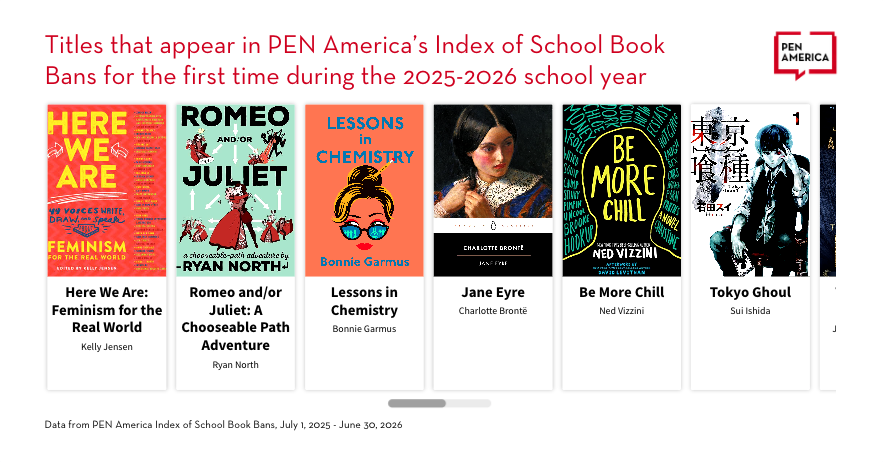
PEN America reported a record number of school book bans in the year ending on June 30: 11,982 books were banned somewhere. Nauseatingly, some schools districts are using AI to decide what books to ban. If you want spicy reading and you find book bans offensive, buy banned books.
The New York Times published a profile of a bunch of librarians. Unsung heroes. (Gift link.)
Three people to follow
Joe Tidy, BBC News Cyber Correspondent and author of Ctrl+Alt+Chaos
Jay Acunzo, public speaking wizard. (This isn’t the first time I’ve recommended him, but he’s on a roll with post after post of fantastically insightful content.)
Kes Sampanthar , sharing insights from 35 years of AI research
Three books to read
The AGI Chronicles: The Inside Story of the Race to Create an Artificial Superintelligence by Kevin Roose (Farrar, Straus and Giroux, 2026). How in hell did we get to this point in AI?

Safer: A Playbook—Turning Fear into Action and Crisis into Community by Raj Panjabi (HarperOne, 2026). A doctor and former advisor to the National Security Council shares practical suggestions on how to cut through the noise when science matters.

Artificial Intimacy: Who We Become When We Talk to Machines by Sherry Turkle (Little Brown, 2026). Our most insightful cultural observer of tech on how AI is changing who we are.
