Disorganized to death; The reader’s manifesto; Elizabeth Holmes returns: Newsletter 9 September 2026
Newsletter 167. Now that we have AI, is disorganization no longer a disability? Plus, how to write case studies, a book-of-the-month club manifesto, three people to follow and three books to read.
File under “whatever” . . .
How organized are you?
At one end of the spectrum are the obsessive organizers. Every file and object is in its place. (Sometimes I think about a former colleague, a CFO, whose desk had three neat stacks of papers that looked like they had been arranged with a T-square.) These people can find anything they’ve ever touched or looked at. Their challenge is that they must spend significant effort maintaining their organization, and when something is out of place, it bugs the crap out of them.
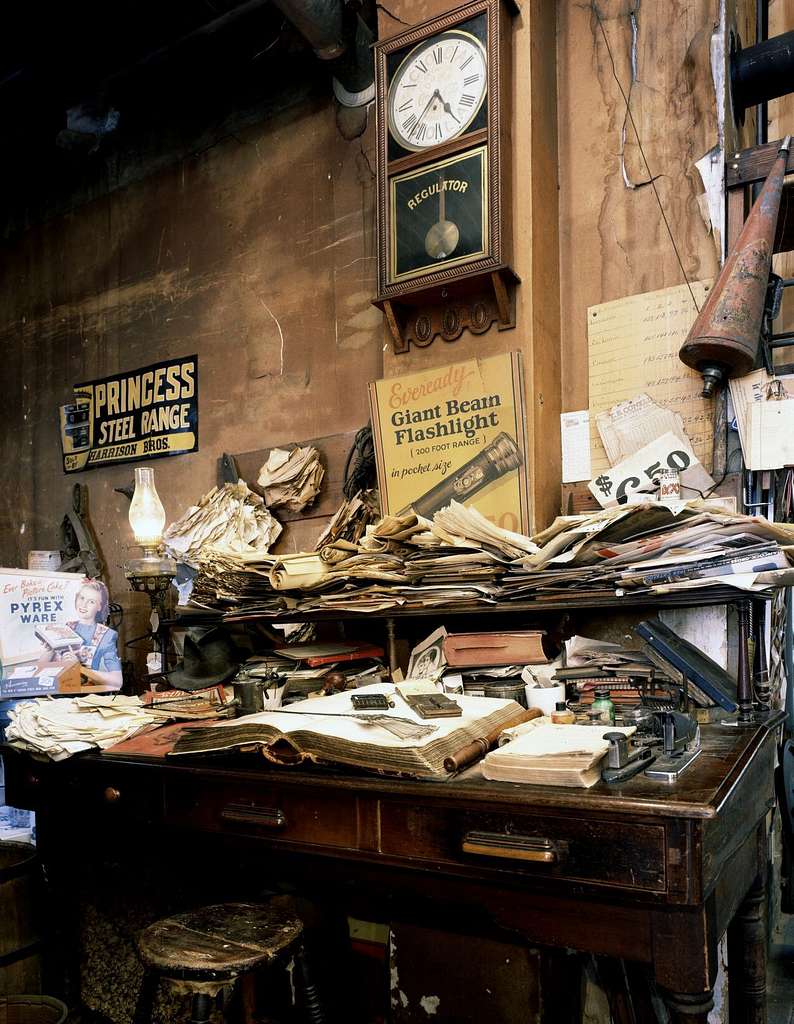
At the other end of the spectrum are the messy mavens. Their system includes piles of stuff, both physical and online. Their attention tends to be drawn to whatever was most recent. God help you if you interrupt them, they may never find their way back to the place they were working. They spend all their time on creating and solving problems and none of it on organizing. That reduces their overhead but creates unnecessary obstacles every time they need to find something.
If there’s a continuum from obsessive organizers (10) to messy mavens (0), I’m at about a 7. The folders on my computer are moderately well organized. My desk is a mess, but I clean it up occasionally. My finances are easily to track, but I don’t use QuickBooks or anything similar. I never delete an email, but I know what’s in there, and I search it when I need to unearth something.
In the past, it was pretty much an article of faith that organized people were more productive than messy people. “Well-organized” was an adjective you’d like to see on a person’s resume or their annual performance review.
Now, I’m not so sure. AI can act as a prosthesis for your level of organization.
The messy mavens can now find that email from a month ago, the file they were working on last week, or the sales report from last quarter, not by where it is organized, but by asking AI to look it up.
I now do this all the time. I find the email I received where the client pasted the edited text directly into the body of the email. I can search my 3,000 or so blog posts and see if I wrote about a topic before. If my client shares a description of a historical event, I can see what the Web has on the same topic. Yes, I know AI can make mistakes. But it’s wicked good at finding stuff.
This has got to bug the obsessive organizers of the world, who are now finding that their obsession is being ignored by many otherwise productive coworkers.
But before you throw up your hands and embrace the chaos, consider this.
We’ve already learned that people who use AI find their skills atrophying. People who use AI to write have lower cognitive activity. Software engineers who code with AI are losing coding skills.
The most intelligent, productive, and creative workers find new ways to think about their work. They carry the organization of the world around in their heads. They read an article about medicine and one about politics and identify how they might connect.
I worry that people who’ve given up on organizing their lives — because AI makes it easy to find anything amid the chaos — will cease to organize their thoughts. And that’s bad for everybody.
What does it mean to be “organized” in the AI era?
It means you have a way to classify and think about the work you do.
You probably ought to write that down. AI might be able to help.
But if you can’t clearly organize your own work in your head, AI is not going to do it for you.
News for writers and other who think
The Book-of-the-Month people published a manifesto pushing back against the “Nobody reads any more” trope. The “death of reading” has been decried for decades, but somehow people are still reading.
Jonathan Hey asks you to consider the ordering problem — is doing what appears to be the right thing for now going to make things worse later?
Rachel Arterberry weighs in: Nonfiction book sales are down, but quality ghostwriting compensation is not. Maybe we’ll finally admit that ghostwriters aren’t hired because they help sell books — but because they help sell the ideas of authors.
On Jane Friedman‘s blog, Amy Isaman provides a systematic explanation of case studies in non-fiction books. Having written about 150 of them and edited hundreds more, I have learned that the key is a protagonist you care about who learns something actionable. And it’s amazing how people will believe a single case study over 100 researched statistics.
The “AI and the Writing Profession” survey, 2026 edition, is still gathering respondents. If you hate AI, weigh in. If you love it, let us know. We need more data. Take 15 minutes and share your perspective with the largest ever survey on writers’ use of AI. Aggregated results will be shared broadly.
She’s baaaack. Elizabeth Holmes is the subject of a bizarre new documentary, “You Can See Everything,” created from highly revealing interviews conducted in her last 36 days before going to jail for defrauding people with her blood test startup Theranos. Fame (or infamy) keeps on giving.
Three people to follow
Mike Gilpin long-tenured industry analyst and expert on the way AI is changing software development
Jenn T. Grace, nonfiction book marketing specialist
Marshall Goldsmith , dean of business coaches
Three books to read
The Answer Economy: How AI Agents Will Decide Your Brand’s Future by Pete Blackshaw (Wiley, 2026). Practical frameworks for becoming the brand that AI chatbots recommend.
You’re It: Crisis, Change, and How to Lead When It Matters Most by Leonard J Marcus, Eric McNulty, Joseph M. Henderson, and Barry C. Dorn (Basic Venture, 2026). Faculty of Harvard’s National Preparedness Leadership Initiative show how to lead in a crisis — and every day.
When America Roared: How the 1980s Saved, Then Broke, the Country–and Led Us to Today by Jonathan Kaufman (Viking, 2026). When things are messed up, change takes root — and that’s exactly what happened 40 years ago.