This changes everything; AI brain atrophy; Bills come due: Newsletter 14 October 2026
Newsletter 172. Which technologies were unpredictably pervasive? Plus, when does AI make you a lazy thinker, how to rank higher in modern Google searches, three people to follow, and three books to read.
Truly transformational technologies
It seems like every 15 minutes or so we hear about a new technology that will disrupt everything. Disruption has gotten cheap and common. And yet, somehow, for 99% of these promised transformational innovations, things are more or less the same afterwards as they were before.
About once every decade or two, though, there are changes that affect nearly every consumer, every business, and the shape of the world. These are the big ones . . . the ones I’d designate as “truly transformation technologies (T³ for short). Here’s my definition of a T³:
- Starts rare and expensive, but becomes pervasive, eventually affecting the majority of humans on the planet.
- Requires every kind of business or institution to transform the way they work to address the change.
- Spawns a host of nonobvious second- and third-order effects; ushers in a set of future changes that’s very difficult to predict when the transformation first begins
Electricity and telecommunication are certainly candidates. But what technologies that have arrived since the dawn of the twentieth century fit the description?
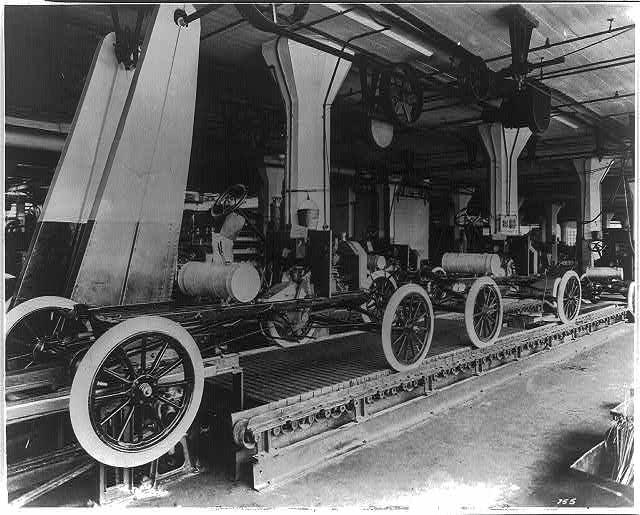
- The automobile and the internal combustion engine. While cars were invented before 1900, Henry Ford’s mass production of the Ford Model T kicked off the rapid expansion of this T³. Cars started at a cost that was out of reach for most people, but soon became cheap enough that a working-class family could afford one. Most of the humans on our planet now either own one or use a vehicle owned by others, like a bus or taxi. Distance is no longer such an obstacle. Motor vehicles transport goods of every variety, and the existence of cars has shaped the highways that connect cities, the shape of those cities, and the existence of suburbs, which arose only once people could commute to work. Even as it spawned entire industries including petroleum refining, it also led to the inexorable rise of global warming.
- The internet and the web. The Web first started to have its impact around 1995. Access was metered at first (the first AOL discs promised “100 hours of free access”) but rapidly became a ubiquitous utility. The instant, searchable availability of information and services changed everything. Every business had to develop an online presence, and increasingly, everybody turned to this resource for every need. Unexpected consequences included new ways for children to self-educate and startlingly effective scams and threats to our privacy.
- Smartphones. When the iPhone launched in 2007 for $499, critics complained that it did a poor job of rendering web sites. But the allure of instant information, navigation, communication, and social connection in your purse or pocket was too great to ignore. Mobile connectivity became cheap enough to reach even individuals and countries that where computers and landlines were rare. Every business now seems to expect you to have a smartphone, and mobile connectivity has eliminated boredom and forever attenuated our attention spans.
While I’m not quite old enough to remember when cars first caught on, I was certainly paying close attention to the web and smartphones. Analysts at the time, including me, identified these disruptions early and predicted their impact on consumer behavior, commerce, media, politics, and work. In most cases, even though we were paid to be imaginative and far-seeing, we were unable to conceive just how big the change would get. When the Web came in, almost nobody predicted the rise of multiplayer gaming or how streaming media would make physical media nearly obsolete. When smartphones launched, few imagined how social media would swallow up so much of people’s time, turn every restaurant into a takeout place, create new categories of influencers, or replace taxis with random drivers making money on the side from their cars.
We are, of course, in the midst of the next T³, artificial intelligence. It’s going to affect everyone by virtue of its inclusion in search results and its deployment by businesses. It’s already taking over software development and threatens to upend if not replace an undetermined number of other jobs. As a technology that enabled the automated production of media, AI is already transforming creative industries like writing, music, and video production.
Based on our history of dealing with T³s, we are likely underestimating AI’s impact. Predictions about what it will do the workforce are inevitably shortsighted. The new shape of education is unclear when every student has an instant answer machine. AI’s ease of use and simple prompt-based interface are enabling it to spread far faster than any previous technology shift. There are plenty of Nostradamuses out there making predictions, but at this point, the only thing you can be certain of is that the coming changes will be different from what everyone expects.
However, what I learned from my years as analyst is this: The predictions will certainly be wrong. The new applications will arise in places no one expects. But this does not make predictions useless — because those who closely track the progress of the technology are best positioned to identify the unexpected shifts when they are still nascent.
What does this mean for you?
Well, imagine the advantages that the first Model T drivers, web users, and smartphone owners had. Willfully hiding from truly transformational technologies is a great way to make yourself obsolete. Observe. Learn. Cultivate curiosity and eschew ignorance. Be aware, and be wary.
I guarantee that AI will make life very different within the next five years. How we as a society deal with those changes — and how you as an individual understand them — depends on staying current. Laggards become victims.
Be skeptical of the hype. But hiding is futile.
News for writers and others who think
Does AI make us lazy thinkers? According to a piece in the New York Times Magazine, “A.I. tools condition people to expect immediate responses and deny them the experience of working through challenges, . . . which is crucial for skill development and one of the strongest predictors of long-term learning.” The article also includes suggestions for how AI can assist thinking — instead of replacing it. (Gift link.)
Marie Haynes writes about how Google has changed what appears higher in search results. Original, helpful content continues to rank. That’s good news for those of us with something useful to say.
In The Atlantic, Kaitlyn Tiffany writes about the Buffalo Bills, the most cursed team in American Sports. Why even read this? Because it’s an awesome piece of writing that will delight you — even if you’re not from Buffalo. (Gift link.)
The EFF describes the continuation of a lawsuit protesting the government’s attempts to target individuals based on what they post on social media.
Shelly Palmer suggests “An AI apocalypse playbook should be part of every company’s business continuity and resiliency plan.” Excuse me while I scream into my pillow for a moment.
In The Chronicle of Higher Education, Beth McMurtrie describes how AI has forced professors to become part of a new Nanny State. (Registration required.)
Three people to follow
Bob Turek , sales whiz and regular poster on AI and changes to enterprise tech
Dan Slater , now launching a business books column for Business Insider
Nicole Schuman , managing editor at PR News
Three books to read
Phrased & Confused: The Curious Meanings of Timeless Quotations by Eli Burnstein (Abrams Books, 2026). Why your favorite quote doesn’t really mean what you think it means.
Data by Design: Visualization and Power from Abolition to the Dawn of Data Science by Lauren F. Klein et al. (MIT Press, 2026). An illustrated political history of data visualization.
Sleeping Beauties: Why Good Ideas Go Dormant and How They Wake Up by David Byrne (Penguin, 2026). How not to be blind to the next great thing.