Everything is public — even if you say it isn’t
At one point in a job I had, I was considering an action that would have been legal and effective but a bit sneaky. I discussed it with my boss. His advice: Don’t do anything you’d be embarrassed about if it became public and everyone knew you did it.
That was great advice. And I didn’t go through with the sneaky action that I was considering.
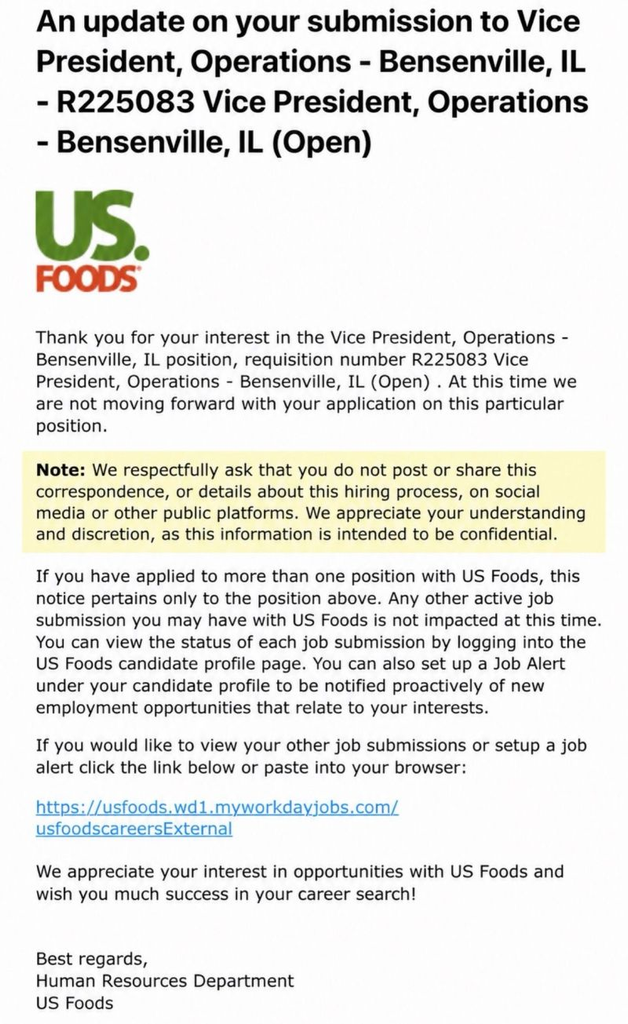
This came to mind when I read about the rejection email a job candidate received recently. It included this passage:
Note: We respectfully ask that you do not post or share this correspondence, or details about this hiring process, on social media or other public platforms. We appreciate your understanding and discretion, as this information is intended to be confidential.
What the company didn’t realize is that the candidate was Alex Pyatkovsky, who has been helpfully posting the results of job searches on his LinkedIn newsletter “Interview Games.” Alex posted the rejection including the paragraph about not sharing it.
Was this unfair? Hell, no. Candidates are a huge disadvantage in the job application process. The hiring company has no right to retroactively classify its process as secret. Alex is doing a service, and nobody should be intimidated by language like this. The company has no right to impose secrecy requirements without the candidate’s agreement.
Everything is public
If you are negotiating with anybody on anything, you have opportunities to impose secrecy. You can ask the counterparty to sign a non-disclosure agreement. You can even informally ask that something be “off the record” and attempt to secure agreement from the other person. If two parties agree in advance to keep something secret, they should respect that agreement.
Of course, if you ask for this, the other party will rightfully interpret your desire for secrecy as potentially indicating that something about what’s going on is a bit shady.
If you want to avoid this, don’t request secrecy. But you don’t get to impose it later just because you want to maintain an advantage over the next 100 candidates negotiating for the same opportunity.
Here’s what this means.
If you badmouth your company, word is going to get back to them.
If you criticize or lie about your competitors, they’ll find out.
If you cut corners or behave unethically, it’s going to leak.
Even in situations where an NDA is in place, you may not be able to keep things secret. For example, many employment agreements attempt to ban employees from discussing their salaries. But such terms are illegal and unenforceable by federal law. You can’t keep salaries secret except by illegal intimidation — and that has its own consequences.
You can appropriately protect proprietary information including strategies and confidential trade secrets with an NDA.
But if you behave badly, you can’t protect that. Word will get out.
My old boss’s advice is still relevant. How would you feel if everyone knew you were doing this?
If the answer is “I would be ashamed,” then just don’t do it.
Just a helpful reminder from the NLRB that lots of folks are not covered by salary transparency, even legally.
Are You Covered?
Excluded from coverage under the Act are public-sector employees (employees of state, federal and local governments and their sub-divisions), agricultural and domestic workers, independent contractors, workers employed by a parent or spouse, employees of air and rail carriers covered by the Railway Labor Act, and supervisors (although supervisors that have been discriminated against for refusing to violate the NLRA may be covered).
The first category is about 25MM folks, the last category about 1MM.